
What Happened: The Core Developments
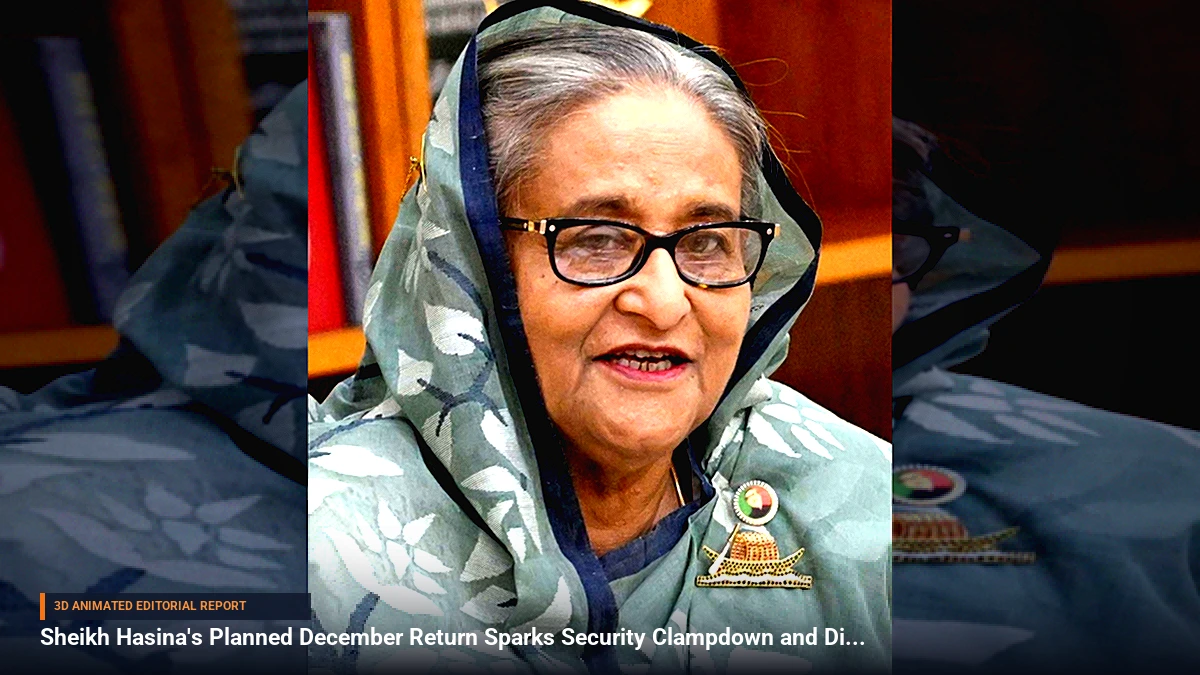
Political fault lines across South Asia have deepened following the announcement that deposed Prime Minister Sheikh Hasina plans to return to Bangladesh from exile on December 16 [39754]. The anticipated homecoming has transformed into a high-stakes security test for the nation's interim administration. In response to potential civil unrest and heightened political polarization, Bangladesh has deployed 108 platoons of the Border Guard Bangladesh (BGB) paramilitary forces in Dhaka and seven other districts [39250, 39302]. Alongside thousands of metropolitan police officers, these heavily armed security units have fortified critical infrastructure and transit hubs to deter mass demonstrations.
Simultaneously, the development has placed bilateral ties between New Delhi and Dhaka under intense scrutiny. While authorities in Dhaka maintain that Hasina must face domestic legal proceedings, her supporters view the December 16 date as a crucial rallying cry to challenge the legitimacy of the post-uprising interim administration.
Background & Key Context
Sheikh Hasina fled Bangladesh amid mass student-led uprisings that dismantled her long-standing government, seeking refuge in neighboring India. Since her departure, the political landscape in Dhaka has undergone seismic shifts, with the interim government pursuing extensive structural reforms and legal accountability for past actions.
Adding complexity to the diplomatic equation, India stated that Sheikh Hasina's voluntary return plan is separate from the formal extradition request made by Bangladesh [39372, 39754]. New Delhi has emphasized a distinct legal and diplomatic separation between her movement as an individual under temporary shelter and the formal judicial channels requested by the Bangladeshi government. Furthermore, regional stability remains a primary concern for Indian authorities, who have continuously flagged broader security issues, noting that India has flagged concerns regarding attacks on minorities in Bangladesh [39754] amidst the ongoing political transition.
Key Takeaways
- Return Date Set: Sheikh Hasina has targeted December 16 for her high-profile return from exile [39754].
- Massive Security Mobilization: Authorities have deployed 108 BGB paramilitary platoons across Dhaka and seven other sensitive districts [39250, 39302].
- Diplomatic Distinction: New Delhi maintains that any voluntary travel plans by Hasina are legally separate from Dhaka’s formal extradition demands [39372, 39754].
- Minority Protection Focus: India has raised official concerns regarding targeted violence against minority communities during the political shift in Bangladesh [39754].
- Heightened Polarization: The impending date serves as a major flashpoint between loyalist factions and the interim government.
Impact, Analysis & Global/National Reactions
The convergence of a voluntary return gambit and an official extradition demand has put international law and diplomatic protocol to the test. Analysts suggest that Hasina's calculated return date—coinciding with Victory Day in Bangladesh—is designed to energize remaining political supporters and force a direct confrontation over state authority.
Regional security experts note that the deployment of over a hundred paramilitary platoons reflects deep anxiety within the interim administration over potential sabotage, clashes, and public unrest. Meanwhile, New Delhi's measured stance highlights a delicate balancing act: maintaining traditional diplomatic norms with its eastern neighbor while managing the complex humanitarian and political realities of hosting a former head of state.
Human rights observers and international stakeholders continue to monitor the situation closely, emphasizing that the safety of religious minorities and adherence to due process will dictate the country's democratic trajectory.
What's Next: Looking Ahead
As December 16 approaches, all eyes will be on transit corridors, border checkpoints, and urban centers in Bangladesh to see whether the planned homecoming materializes or is thwarted by legal and physical blockades. Diplomatic channels between New Delhi and Dhaka will remain strained as both capitals navigate the friction between voluntary movement claims and formal extradition warrants. Stakeholders will also monitor whether the heavy paramilitary presence successfully maintains public order or exacerbates civil tensions in the lead-up to the winter political showdown.

Be the first to comment
Start a useful conversation around this story.