
What Happened: The Core Developments
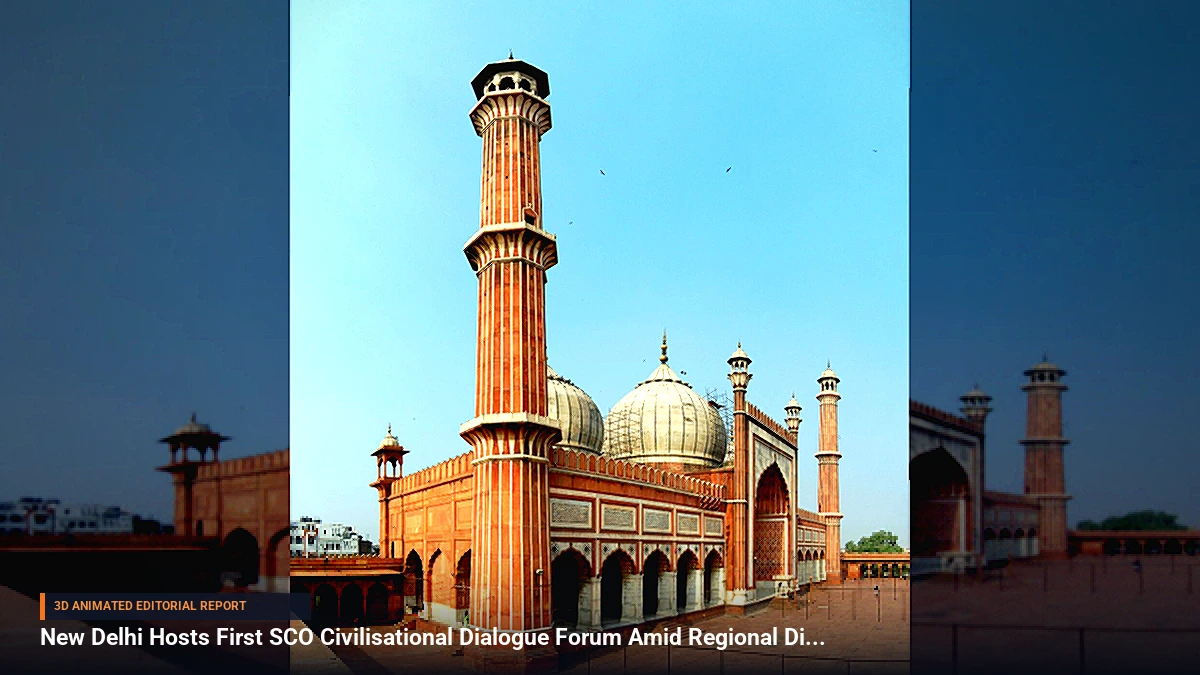
India has officially commenced hosting the first-ever Shanghai Cooperation Organisation (SCO) Civilisational Dialogue Forum in New Delhi. Prime Minister Narendra Modi inaugurated the prestigious three-day event, hosted against the striking backdrop of the historic Purana Quila. The gathering serves as a prominent platform for member states of the SCO to deliberate on shared heritage, cultural diplomacy, and multilateral cooperation.
While India initially extended an invitation to Pakistan’s Culture and National Heritage Minister, Aurangzeb Khan Khichi, in line with established protocol, Islamabad ultimately dispatched a different delegate. Pakistan Minister Musadik Malik traveled to the Indian capital to lead his country's delegation. During the proceedings, Malik invoked historical legacies tied to the venue itself, referencing historical figures such as Humayun and Sher Shah Suri to emphasize regional cultural diversity and shared heritage.
Background & Key Context
The SCO Civilisational Dialogue Forum marks a novel approach to regional engagement, utilizing cultural history and civilisational links as bridges across geopolitical divides. The venue of the forum, Purana Quila, holds profound historical significance, housing archaeological layers that reflect centuries of shifting governance and cultural synthesis in South Asia.
Despite the cultural framing of the conference, broader geopolitical undertones inevitably shadowed the diplomatic exchange. Minister Malik’s presence in New Delhi coincided with ongoing strategic and transboundary water dialogue debates, specifically concerning the Indus Waters Treaty (IWT), keeping bilateral tensions simmering beneath the diplomatic veneer.
Key Takeaways
- Inaugural Event: Prime Minister Narendra Modi inaugurated the first SCO Civilisational Dialogue Forum at New Delhi's Purana Quila.
- High-Level Delegation: Pakistan was represented by Minister Musadik Malik, who stepped in instead of the originally invited culture minister.
- Cultural Diplomacy: Malik invoked historical figures like Humayun and Sher Shah Suri to highlight historical coexistence and cultural diversity.
- Multilateral Engagement: The three-day forum focuses on leveraging shared heritage and civilisational knowledge among SCO member states.
- Underlying Realities: The visit occurred alongside critical regional issues, including persistent debates over the Indus Waters Treaty and counter-terrorism frameworks.
Impact, Analysis & Global/National Reactions
The convergence of diplomats at the Purana Quila underscores the complex interplay between cultural outreach and hard-nosed diplomacy within the SCO bloc. Analysts note that while multilateral forums provide a rare avenue for direct contact between estranged neighbors like India and Pakistan, they rarely produce immediate breakthroughs on intractable political disputes.
Domestic reactions within India reflected a mix of pragmatic optimism and guarded caution. Veteran political figures, such as Farooq Abdullah, publicly welcomed the visit of the Pakistani minister, framing it as a positive step for diplomatic engagement. Concurrently, Indian policymakers maintained a firm stance on core national security and resource matters, demonstrating that cultural forums remain distinct from substantive political negotiations.
What's Next: Looking Ahead
As the three-day dialogue concludes, attention will shift toward how member states translate civilisational commitments into practical regional frameworks. Observers will be closely watching whether this cultural dialogue opens doors for subsequent diplomatic interactions or remains an isolated multilateral exercise. Meanwhile, bilateral frictions regarding transboundary resources and regional security parameters are expected to proceed through their respective dedicated channels, unaffected by the soft-power optics of the New Delhi forum.


Be the first to comment
Start a useful conversation around this story.