
What Happened: The Core Developments
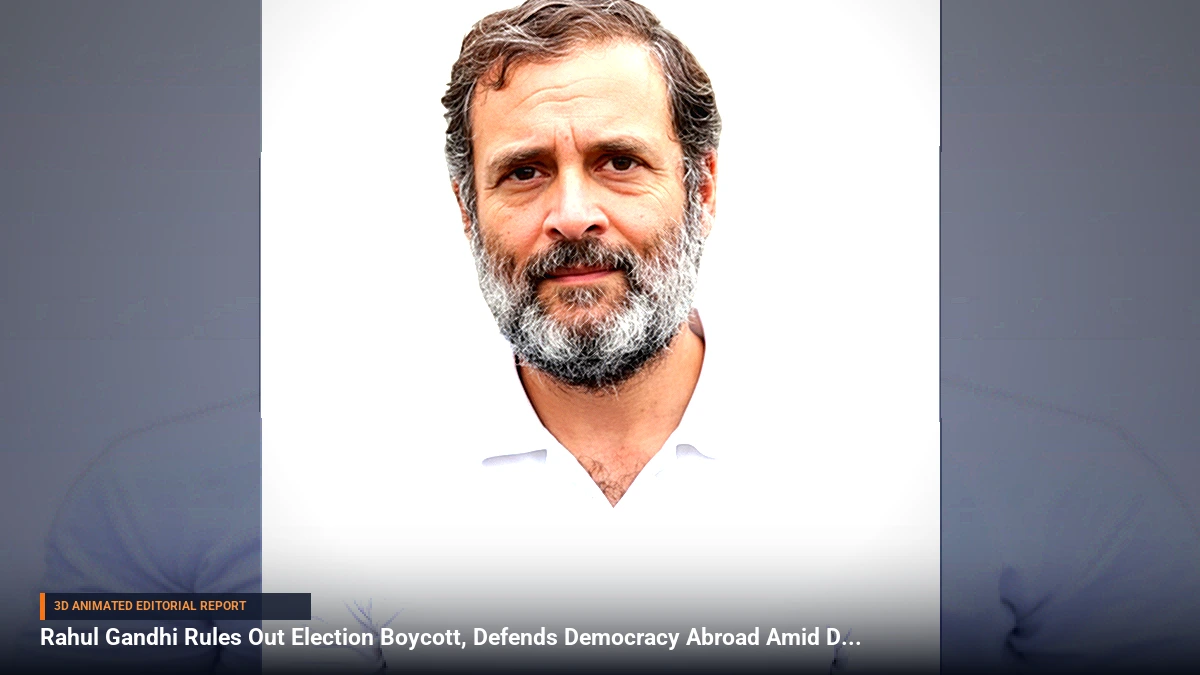
Senior Indian opposition leader Rahul Gandhi, during an address at the University of Chicago, explicitly ruled out any proposition of boycotting elections, stressing that such a move would effectively dismantle Indian democratic frameworks. Addressing an international audience, Gandhi emphasized that despite institutional friction and perceived electoral irregularities, the opposition would maintain active participation.
He revealed that while internal discussions among party colleagues had weighed various options, senior Congress leaders ultimately advised against walking away from the ballot box. Instead, the opposition strategy will focus on competing actively while simultaneously exposing structural and administrative irregularities in the electoral process. Gandhi described Indian democracy as fundamentally sacred, pushing back against critics who mischaracterize his warnings about the health of the republic.
Background & Key Context
Discussions surrounding electoral participation and systemic fairness have increasingly taken center stage in Indian national politics. Opposition parties have repeatedly raised concerns regarding institutional integrity and the level playing field during election cycles. However, suggestions of a blanket election boycott have consistently divided political strategists.
On the domestic front, the Congress party's coalition-building efforts have also faced turbulence. Recently, regional friction surfaced when Akhil Gogoi, chief of Assam's Raijor Dal and an estranged former ally, launched a scathing critique against Gandhi. Gogoi accused the Congress leadership of fracturing grassroots people's movements, highlighting the persistent challenges the grand old party faces in maintaining cohesive regional alliances ahead of critical electoral battles.
Key Takeaways
- Firm Rejection of Boycotts: Rahul Gandhi stated at the University of Chicago that boycotting elections would end Indian democracy.
- Internal Strategic Consensus: Congress leaders advised against a poll boycott, determining that continued participation is vital.
- Dual Strategy: The opposition intends to contest elections vigorously while simultaneously calling out electoral irregularities.
- Regional Friction: Assam's Raijor Dal chief Akhil Gogoi recently criticized Congress for splitting local people's movements.
- Rhetorical Clashes: Gandhi defended his characterization of Indian democracy as sacred, responding to political adversaries who misinterpret his critique.
Impact, Analysis & Global/National Reactions
The interplay between international commentary and domestic friction highlights the delicate balancing act facing India's opposition leadership. By taking his message abroad, Gandhi aims to galvanize global attention toward the challenges confronting India's democratic institutions. Yet, domestic reactions remain sharply polarized.
Political opponents, particularly within the ruling Bharatiya Janata Party (BJP), have frequently accused Gandhi of defaming the nation on international platforms. Conversely, supporters argue that constructive critique and foreign academic discourse are essential tools for safeguarding constitutional norms. Meanwhile, regional actors like Akhil Gogoi demonstrate that the opposition must also navigate profound localized distrust if it hopes to build a unified front.
What's Next: Looking Ahead
As political parties prepare for upcoming electoral cycles across various states, the debate over electoral integrity will remain a central pillar of political campaigning. The opposition's commitment to participating in polls while auditing irregularities sets the stage for high-stakes electoral battles. Simultaneously, Congress will need to address regional grievances and mend fences with estranged grassroots allies if it hopes to consolidate a formidable anti-incumbency coalition.

Be the first to comment
Start a useful conversation around this story.