
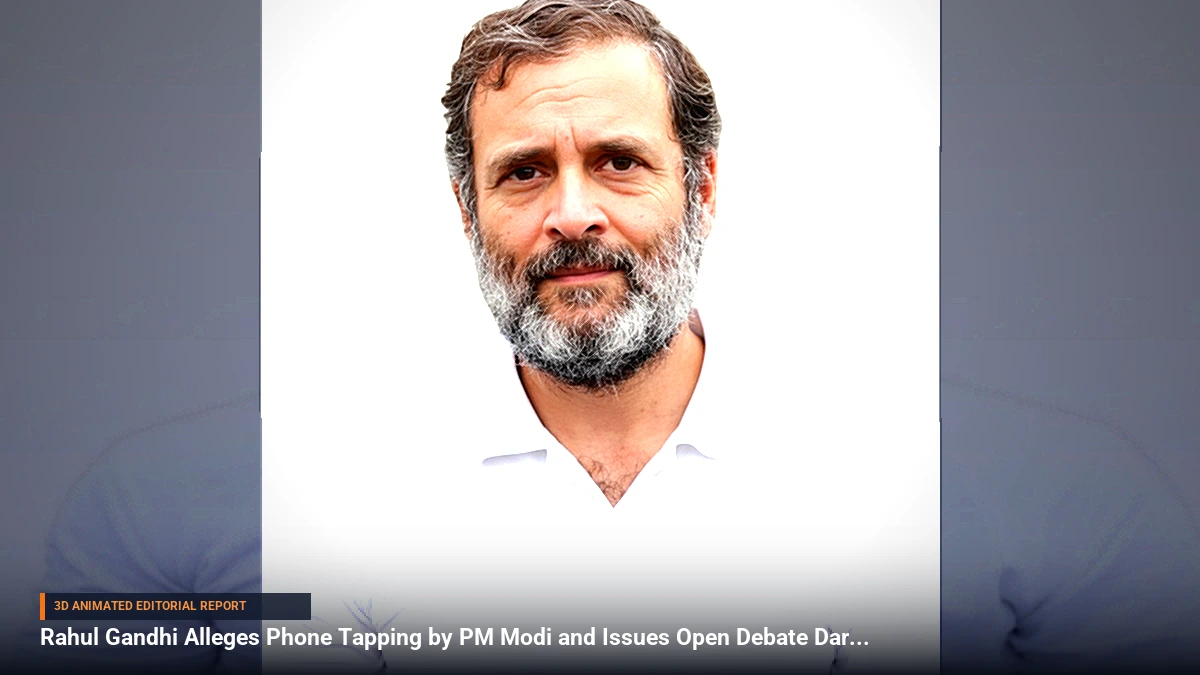
What Happened: The Core Developments
In a striking escalation of political rhetoric, senior opposition figure Rahul Gandhi levied a direct accusation against Prime Minister Narendra Modi, alleging that his phone is actively being tapped by the government. Holding up his mobile device during a public address, Gandhi asserted that the administration possesses direct knowledge of his communications because state apparatus is utilized to monitor him.
Following the explosive surveillance claim, Gandhi issued a formal challenge, daring Prime Minister Modi to a face-to-face, public debate. He claimed that the current administration would not retain power following a direct intellectual contest. The dual salvo instantly dominated national headlines, igniting a fierce political debate across mainstream and digital media platforms.
Background & Key Context
Accusations of state-sponsored electronic surveillance have long been a flashpoint in Indian politics. Previous controversies, such as the Pegasus spyware allegations, created deep legislative divides and widespread protests. However, personalizing the surveillance claim directly to the office of the Prime Minister marks a distinct intensification in the opposition's strategy.
Open debate challenges between top-tier political adversaries are rare in modern Indian electoral politics. While political parties routinely engage in verbal sparring during election campaigns and parliamentary sessions, direct one-on-one televised or public debates remain uncommon, often dismissed by ruling establishments as publicity maneuvers rather than substantive policy forums.
Key Takeaways
- Direct Allegation: Rahul Gandhi publicly claimed that Prime Minister Narendra Modi taps his phone, holding up his device as a symbolic gesture during his remarks.
- Debate Challenge: Gandhi dared the Prime Minister to a public one-on-one debate, asserting that Modi would not remain in power afterward.
- Governing Party Response: The Bharatiya Janata Party (BJP) forcefully dismissed the allegations and rhetoric, countering Gandhi's claims with sharp political criticism.
- Surveillance Discourse: The exchange revives ongoing national and international debates regarding digital privacy, state oversight, and the security of political opponents.
- Broad Political Reactions: Allies and rival parties alike weighed in on the feasibility and tone of the open debate challenge.
Impact, Analysis & Global/National Reactions
The explosive remarks drew immediate counter-attacks from the ruling party. Representatives of the Bharatiya Janata Party swiftly rejected the surveillance claims, offering sharp retorts that dismissed Gandhi's mental fortitude and characterized the debate challenge as unserious. Political analysts note that such rhetoric is designed to galvanize the opposition base and keep the pressure squarely on the executive branch regarding civil liberties and digital rights.
Reactions from broader political circles were mixed. Coalition partners of the ruling alliance downplayed the debate challenge, comparing it unfavorably to entertainment spectacles rather than serious democratic discourse. Meanwhile, opposition supporters praised Gandhi for adopting a direct and aggressive posture against the executive leadership.
What's Next: Looking Ahead
As the political fallout from these statements continues to reverberate through legislative corridors and newsrooms, attention turns to how upcoming parliamentary sessions will address privacy and cybersecurity concerns. While a direct one-on-one debate between the Prime Minister and the opposition leader remains highly unlikely, the rhetoric sets a combative tone for upcoming electoral campaigns and legislative showdowns.

Be the first to comment
Start a useful conversation around this story.