
What Happened: The Core Developments
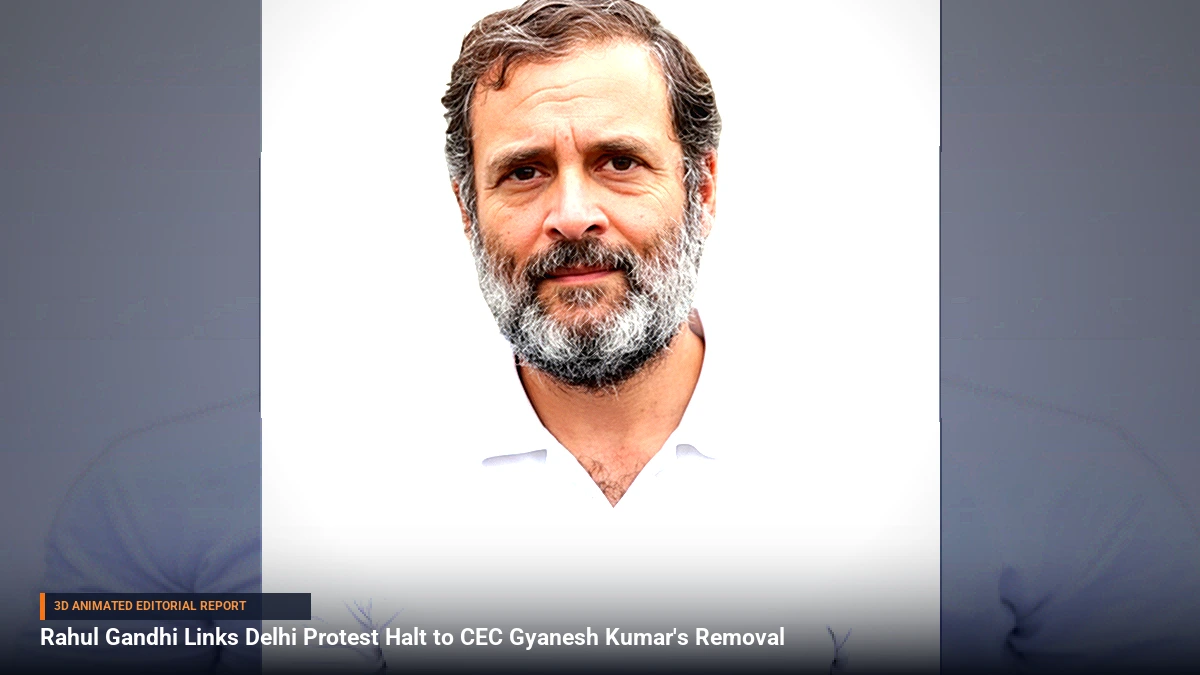
Political tensions in the national capital have scaled new heights following remarks by prominent opposition figure Rahul Gandhi concerning the ongoing demonstrations at Ramlila Maidan. Responding directly to appeals from local business communities regarding upcoming political mobilizations, Gandhi stated that the street protests could be resolved in a matter of thirty seconds if Prime Minister Narendra Modi takes the step to sack Chief Election Commissioner (CEC) Gyanesh Kumar.
The statement arrives on the heels of formal requests made by the Chamber of Trade and Industry (CTI), which had publicly urged opposition leaders to defer their planned November 1 protest rally. Traders have voiced profound concerns over potential economic disruptions, logistical bottlenecks, and substantial financial losses during a crucial business season.
Background & Key Context
The standoff highlights the deepening rift between the ruling administration and opposition parties over institutional integrity and electoral oversight. The opposition bloc has increasingly targeted the Election Commission of India, questioning its autonomy and administrative decisions. Trade associations, caught in the crossfire of escalating street politics, have repeatedly emphasized that major demonstrations in central commercial hubs severely impact local commerce, retail sales, and daily supply chains.
Prior to Gandhi’s remarks, the CTI had formally requested the deferment of the November 1 demonstration until after mid-November to shield businesses from projected economic downturns during festive and trading windows. Rather than scaling back the mobilization, the opposition has doubled down on its political messaging, using the trader appeals to frame the dispute as a broader struggle involving institutional accountability.
Key Takeaways
- Direct Condition: Rahul Gandhi asserted that the ongoing protests can be called off in just 30 seconds if Prime Minister Narendra Modi removes CEC Gyanesh Kumar.
- Trade Body Intervention: The Chamber of Trade and Industry (CTI) had previously requested the opposition to defer the November 1 protest rally to prevent commercial losses.
- Escalating Friction: The political confrontation underscores mounting tensions between opposition parties and key constitutional authorities.
- Commercial Concerns: Local businesses and merchants remain anxious about the economic fallout of large-scale rallies in central Delhi.
Impact, Analysis & Global/National Reactions
Market analysts and political observers note that the standoff places local businesses in an increasingly precarious position. Commercial associations have pointed to significant trade vulnerabilities whenever major political agitations paralyze central areas of Delhi. By tying the cessation of protests directly to the removal of a high-ranking constitutional authority, the opposition has effectively internationalized and nationalized a localized administrative dispute, turning a logistical disagreement with trade bodies into a referendum on executive accountability.
Political commentators suggest that the strategy aims to maintain pressure on the central government while deflecting criticism regarding public inconvenience by shifting the onus onto the administration's refusal to act against institutional heads. Meanwhile, ruling party representatives have strongly condemned the opposition's rhetoric, characterizing the demands targeting the CEC as an assault on independent constitutional institutions.
What's Next: Looking Ahead
All eyes remain fixed on the unfolding timeline leading up to the November 1 rally at Ramlila Maidan. With trade bodies continuing behind-the-scenes lobbying to mitigate potential economic disruptions and opposition leaders pressing forward with their mobilization schedules, the coming days will test the willingness of both political actors and civil authorities to negotiate a compromise. Further statements from the Election Commission and judicial observations regarding public protests in capital zones could significantly alter the trajectory of the standoff.
Be the first to comment
Start a useful conversation around this story.