
What Happened: The Core Developments
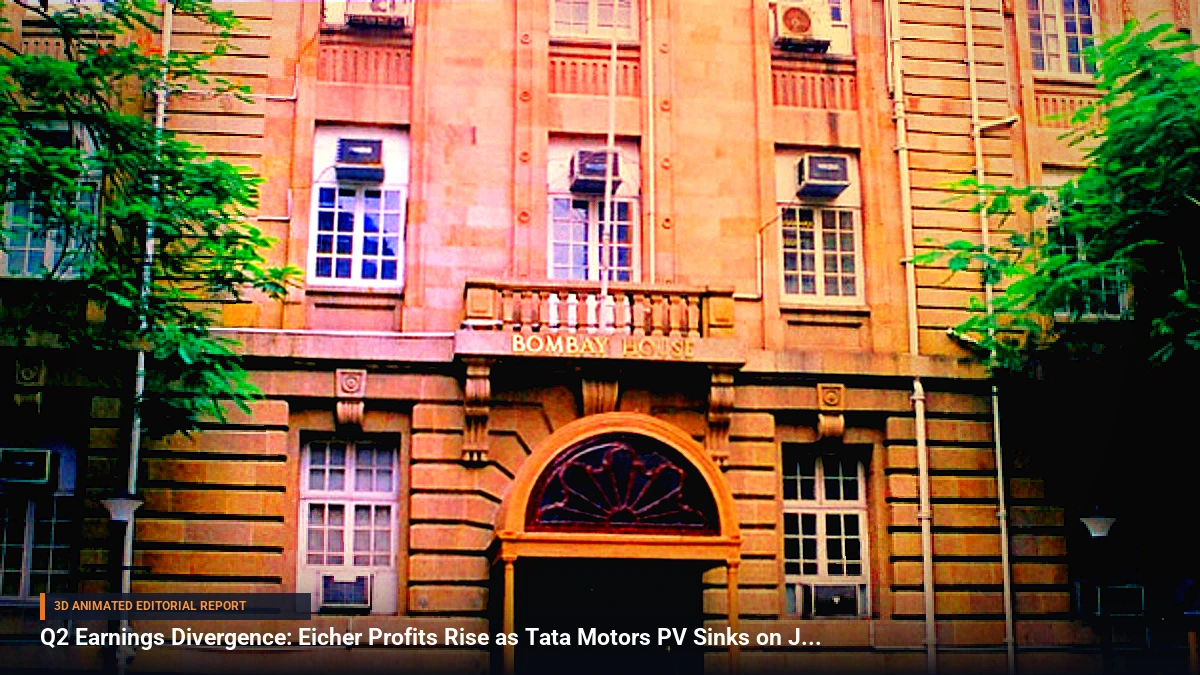
The latest batch of second-quarter financial reports has painted a complex picture of corporate health across India's industrial and consumer landscapes. Eicher Motors reported a 15% year-on-year increase in net profit, reaching Rs 1,573 crore. However, the figures fell short of consensus analyst estimates due to lingering pressures from escalating operational and input costs.
In sharp contrast, Tata Motors PV encountered heavy headwinds, swinging to a net loss of Rs 5,531 crore for the quarter. The staggering deficit was primarily attributed to costly restructuring initiatives associated with its luxury vehicle arm, Jaguar Land Rover (JLR). Elsewhere in the corporate arena, Godrej Industries posted robust figures with a surge in net profit to Rs 560 crore, while telecom major Vodafone Idea saw its quarterly net loss widen to Rs 5,975 crore even as its revenue ticked upward to Rs 11,884 crore.
The domestic equity markets reacted negatively to the mixed earnings landscape and broader macroeconomic anxiety. The benchmark Sensex dropped 318 points, while the Nifty 50 slipped below the critical 25,200 threshold as rate hike fears and renewed inflation worries dampened investor sentiment.
Background & Key Context
Corporate earnings cycles are increasingly pressured by macroeconomic crosscurrents, including volatile commodity prices, persistent consumer inflation, and high interest rate regimes. Eicher Motors has traditionally maintained robust margins through strong demand in its motorcycle segment, yet margin expansion has faced continuous checks from supply chain shifts and rising manufacturing expenses.
For Tata Motors, the integration and structural overhaul of JLR remain critical strategic imperatives that frequently introduce short-term financial volatility despite healthy top-line volumes. Meanwhile, the telecom sector continues to grapple with high capital expenditure and debt servicing burdens, as illustrated by Vodafone Idea's persistent financial strain despite improvements in average revenue per user (ARPU).
Key Takeaways
- Eicher Motors Growth: Net profit climbed 15% to Rs 1,573 crore, though it missed street estimates due to cost pressures.
- Tata Motors PV Setback: The passenger vehicle division logged a heavy net loss of Rs 5,531 crore, heavily impacted by JLR restructuring charges.
- Telecom Pressures: Vodafone Idea reported a widened net loss of Rs 5,975 crore despite a rise in quarterly revenue.
- Divergent Consumer/Industrial Health: Firms like Godrej Industries demonstrated resilience with strong profit surges to Rs 560 crore.
- Broader Market Correction: Indian indices retreated, with the Sensex falling 318 points and Nifty 50 slipping below 25,200 amid inflation and monetary tightening fears.
Impact, Analysis & Global/National Reactions
Market analysts suggest that the divergence in Q2 scorecards highlights how corporate operational agility and cost-control measures dictate market rewards in a high-inflation environment. While legacy automakers navigate massive structural outlays, consumer goods and select industrial segments continue to exhibit robust demand fundamentals.
Financial experts note that investors are increasingly penalizing firms that fail to meet earnings expectations, as demonstrated by the sharp reactions in stocks like Tata Motors PV and Shriram Finance during the broader market pullback. Institutional reactions emphasize a flight to safety as consumer price index (CPI) prints and potential central bank rate decisions loom large over corporate expansion plans.
What's Next: Looking Ahead
As the earnings season draws to a close, market participants will closely monitor upcoming macroeconomic data releases, particularly retail inflation trends and central bank commentary regarding interest rate trajectories. For automotive players, upcoming festival season sales figures and commodity price trends will be critical in determining margin recovery in the second half of the fiscal year. Meanwhile, financially stressed entities like Vodafone Idea will remain under regulatory and investor scrutiny regarding capital-raising plans and debt-restructuring progress.


Be the first to comment
Start a useful conversation around this story.