
What Happened: The Core Developments
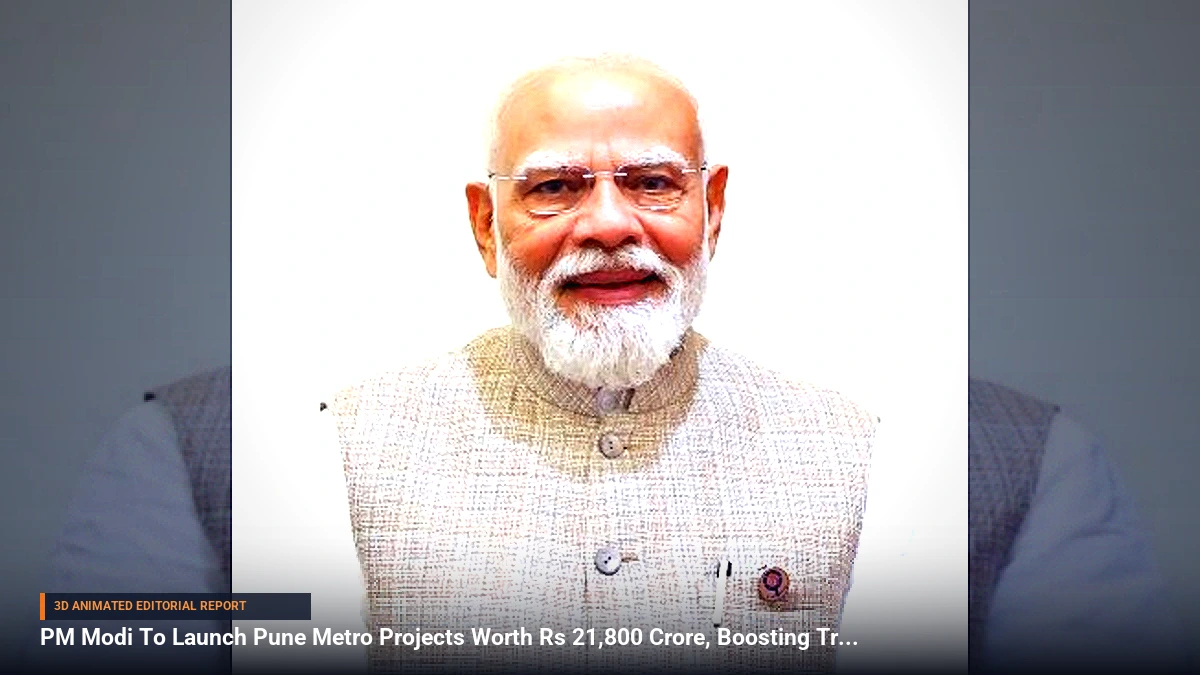
Prime Minister Narendra Modi is officially set to unveil an expansive portfolio of urban transit transformations in Pune, headlined by the rollout of projects totaling an estimated Rs 21,800 crore. At the heart of this comprehensive infrastructure push is the inauguration of the Pune Metro Line 3—widely recognized as the Pink Line. Spanning approximately 23 kilometres (23.2 km in specific operational metrics), this vital corridor bridges the high-activity technology and residential hub of Maan with the vital civic nucleus at the District Court Metro station.
Ahead of the grand launch, municipal and transit authorities have put final touches on the stations, aiming to drastically alleviate commuter congestion across western Maharashtra's rapidly expanding industrial and IT capital. The development signals an aggressive acceleration in India's metropolitan transport network, prioritizing high-density economic corridors to streamline everyday mobility.
Background & Key Context
Pune has experienced unprecedented economic growth over the past decade, driven heavily by its booming information technology sectors, manufacturing bases, and educational institutions. This rapid urbanization, however, brought severe traffic congestion, prompting a massive overhaul of the city's public transportation framework.
The conceptualization and execution of Pune Metro Line 3 (the Hinjewadi to District Court corridor) marks a critical milestone in public-private partnership (PPP) models for mass rapid transit systems in India. Designed to link key employment zones with core civic infrastructure, the route alleviates surface-level vehicular pressure on some of the city's most congested arteries, setting a precedent for future urban expansions.
Key Takeaways
- Massive Financial Investment: Prime Minister Narendra Modi is launching comprehensive Pune Metro projects valued at a staggering Rs 21,800 crore.
- The Pink Line Unveiled: The newly completed Line 3 spans roughly 23 kilometres, seamlessly linking Maan to the District Court Metro station.
- Strategic IT Corridor Integration: The route directly connects major technology and employment clusters like Hinjewadi with the urban core, slashing daily commute times.
- Phase-II Expansion Push: Alongside the operationalization of the Pink Line, the program includes foundation launches and rollouts for subsequent phases of the city's metro network.
- Urban Mobility Focus: The overarching initiative aims to curb rising carbon emissions, vehicular traffic, and transit bottlenecks in western India's primary industrial hub.
Impact, Analysis & Global/National Reactions
Urban planners and economic analysts have lauded the infusion of Rs 21,800 crore as a transformative injection into Pune’s regional economy. By modernizing public transit, the city enhances its appeal as a top-tier destination for multinational corporations and domestic tech enterprises alike. Stakeholders anticipate that seamless connectivity will translate directly into higher commercial property valuations, increased productivity, and a tangible reduction in fossil fuel dependence for daily commuters.
However, transit experts also emphasize the importance of robust multi-modal integration—ensuring that feeder buses, auto-rickshaws, and pedestrian pathways are tightly synchronized with the new metro terminals. Municipal officials have expressed confidence that the systemic changes will redefine the commuter experience across the metropolitan region.
What's Next: Looking Ahead
Following the formal inauguration by the Prime Minister, attention will shift toward the immediate commercial operational timelines and passenger ridership metrics for the Pink Line. Transit authorities will closely monitor initial load factors, ticket-gate efficiencies, and station accessibility.
Furthermore, execution timelines for the broader Phase-II network components funded under the Rs 21,800 crore allocation will be rolled out by regional transit boards in the coming quarters. Citizens and commercial entities alike await further announcements detailing station expansions and intermodal ticket integration.

Be the first to comment
Start a useful conversation around this story.