
What Happened: The Core Developments
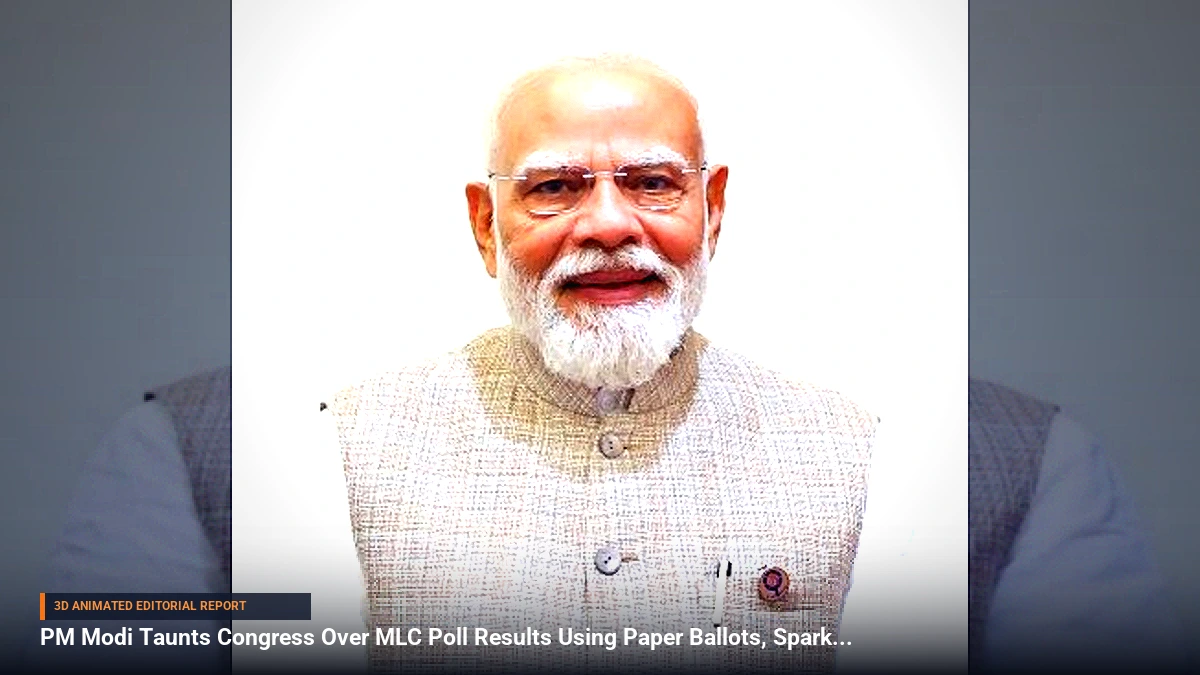
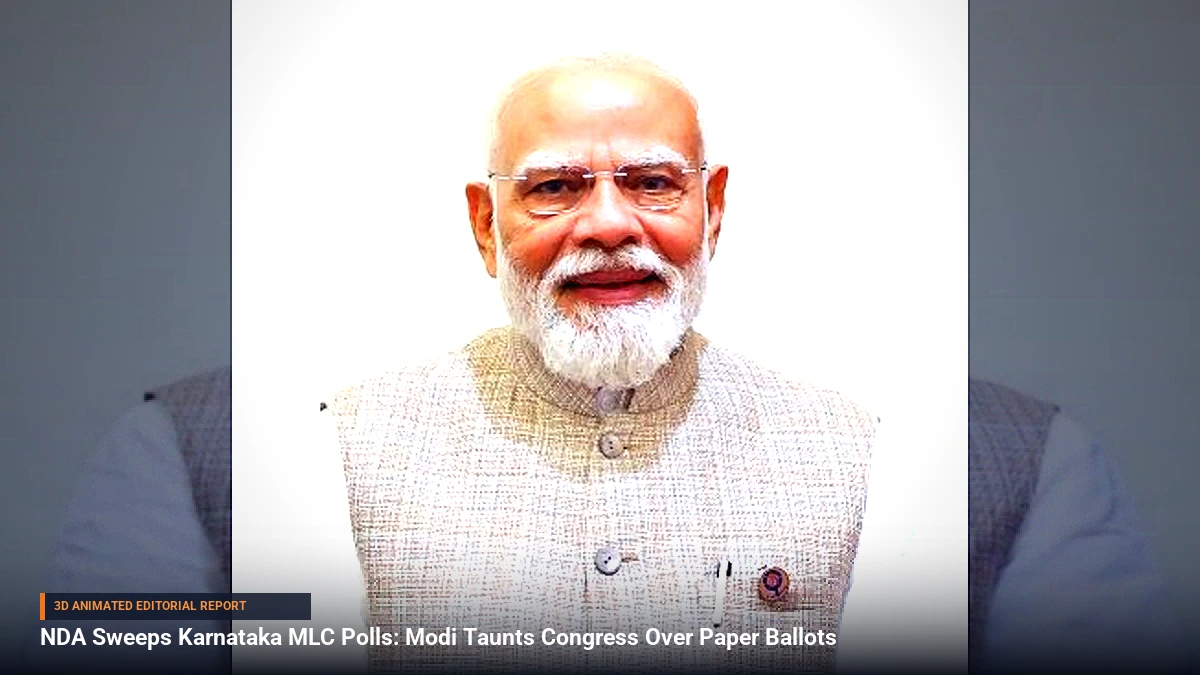
Prime Minister Narendra Modi recently directed a sharp rhetorical taunt at the Congress party, highlighting its abysmal performance in the latest Legislative Council (MLC) elections. The polls, which spanned across four states, involved a total of 28 Legislative Council seats—including closely watched contests in Karnataka.
What made the outcome particularly striking for national political discourse was the voting mechanism used: traditional paper ballots. The Congress party completely failed to open its account, leaving it without a single seat. Meanwhile, the Bharatiya Janata Party (BJP) secured notable victories, particularly in Uttar Pradesh, while newly emerging political forces like Jan Suraj successfully opened their accounts in states such as Bihar.
Background & Key Context
The debate over voting mechanisms in India has long been a flashpoint between the ruling dispensation and the opposition. For years, various opposition parties, led by Congress, have frequently questioned the credibility of Electronic Voting Machines (EVMs), occasionally calling for a return to physical ballot papers during general and state assembly elections.
However, the recent MLC by-elections provided a rare empirical counter-argument. Conducted via paper ballots rather than electronic machines, the results delivered a devastating blow to the opposition. Seizing this operational reality, Prime Minister Modi used social media and public addresses to mock the opposition's electoral failures under the very system they have periodically advocated for, punctuating his remarks with pointed emojis.
Key Takeaways
- Total Shutout: The Congress party failed to win a single seat out of the 28 contested Legislative Council vacancies across four states.
- The Ballot Jibe: PM Modi publicly taunted the opposition, emphasizing that the defeat occurred despite the use of paper ballots instead of EVMs.
- Counter-Challenge: Reacting sharply to the Prime Minister's remarks, the Congress party dared the central leadership to commit to nationwide adoption of ballot papers for all future elections.
- Regional Shifts: While the BJP cemented its presence with wins in states like Uttar Pradesh, regional outfits such as Jan Suraj made strategic inroads by opening their accounts in Bihar.
Impact, Analysis & Global/National Reactions
The exchange underscores how electoral outcomes are routinely weaponized in India's high-stakes political messaging. For the ruling BJP, the MLC results serve as a convenient narrative tool to dismantle opposition critiques regarding the integrity of EVMs. Ruling party leaders have aggressively heckled the opposition, arguing that the underlying issue is not the technology of the ballot box, but rather the lack of grassroots connection and public mandate.
Conversely, the opposition's swift counter-dare—challenging the government to implement paper ballots nationwide—signals that the Congress is unwilling to let the narrative rest solely on administrative defeat. Political analysts note that while returning to physical ballots remains a logistical improbability for a nation of over 900 million voters, the rhetorical duel keeps the broader question of electoral transparency front and center in the public consciousness.
What's Next: Looking Ahead
As political parties digest the outcome of these regional council polls, the ripple effects will likely influence upcoming legislative strategies and state-level assembly campaigns. While the Election Commission of India remains firmly committed to EVMs backed by VVPAT (Voter Verifiable Paper Audit Trail) verification, the ongoing war of words ensures that voting technology will remain a central thematic battleground in upcoming electoral showdowns.




Be the first to comment
Start a useful conversation around this story.