
What Happened: The Core Developments
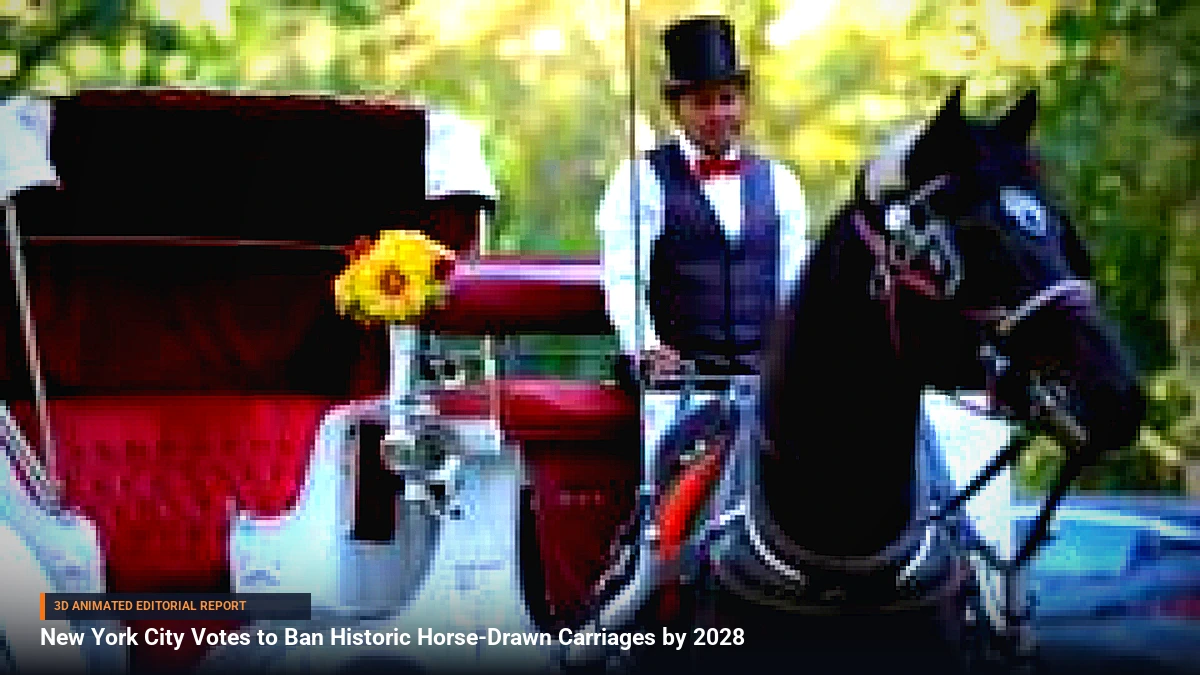
New York City has officially voted to enact a complete ban on its iconic horse-drawn carriages, drawing a definitive line under a decades-long debate over urban animal welfare. The landmark legislative decision sets a firm expiration date for the carriages, with the entire trade scheduled to be phased out completely by 2028.
This crucial policy shift follows months of intense public scrutiny and political pressure, ignited in the wake of a tragic accident involving an Indian tourist. The incident thrust the safety protocols, working conditions, and ethical implications of maintaining a horse-drawn carriage operation in a densely populated modern metropolis back into the center of the political arena.
Background & Key Context
For roughly 150 to 160 years, horse-drawn carriages have remained a staple of tourism in and around Central Park, serving as a nostalgic backdrop for millions of visitors. However, the tradition has long been a lightning rod for controversy.
Animal welfare organizations have spent decades campaigning against the practice, citing the hazards of forcing large animals to navigate chaotic Manhattan traffic, extreme weather conditions, and confined stabling environments. Conversely, operators and traditionalists have defended the industry as an irreplaceable part of New York's cultural fabric, arguing that the horses are well-cared-for and that the trade supports numerous working-class families.
Key Takeaways
- The Decision: New York City has voted to ban horse-drawn carriages, ending a century-and-a-half-old tradition.
- The Timeline: A phased transition has been established, giving the industry an official expiry date in 2028.
- The Catalyst: The legislative push gained critical momentum following the tragic death of an Indian tourist.
- Economic Anxiety: Carriage drivers and industry workers have voiced profound fears regarding sudden job losses and the destruction of their livelihoods.
- Public Division: Residents and visitors around Central Park remain sharply split between prioritizing modern animal welfare ethics and preserving historical tourism.
Impact, Analysis & Global/National Reactions
The vote has triggered intense debate across multiple sectors. Animal rights groups have hailed the decision as a monumental victory for ethical treatment, emphasizing that modern cities should no longer subject working animals to the stresses of heavy urban traffic and environmental hazards.
On the other side of the spectrum, the city's carriage drivers face an uncertain economic future. Representatives for the drivers argue that the ban threatens their financial stability without offering adequate transition support or alternative employment options that match their specialized skills. Public sentiment around Central Park reflects this deep polarization, with tourists and locals divided over whether the carriages represent a charming piece of old New York or an outdated practice that belongs in the past.
What's Next: Looking Ahead
As the city works toward the 2028 deadline, attention will turn to the implementation details of the phased ban. Stakeholders are pressing municipal leaders to address the economic fallout for drivers and handlers, potentially negotiating transition packages, retraining programs, or alternative tourism models that maintain employment opportunities in the Central Park area without the use of live animals.






Be the first to comment
Start a useful conversation around this story.