
What Happened: The Core Developments
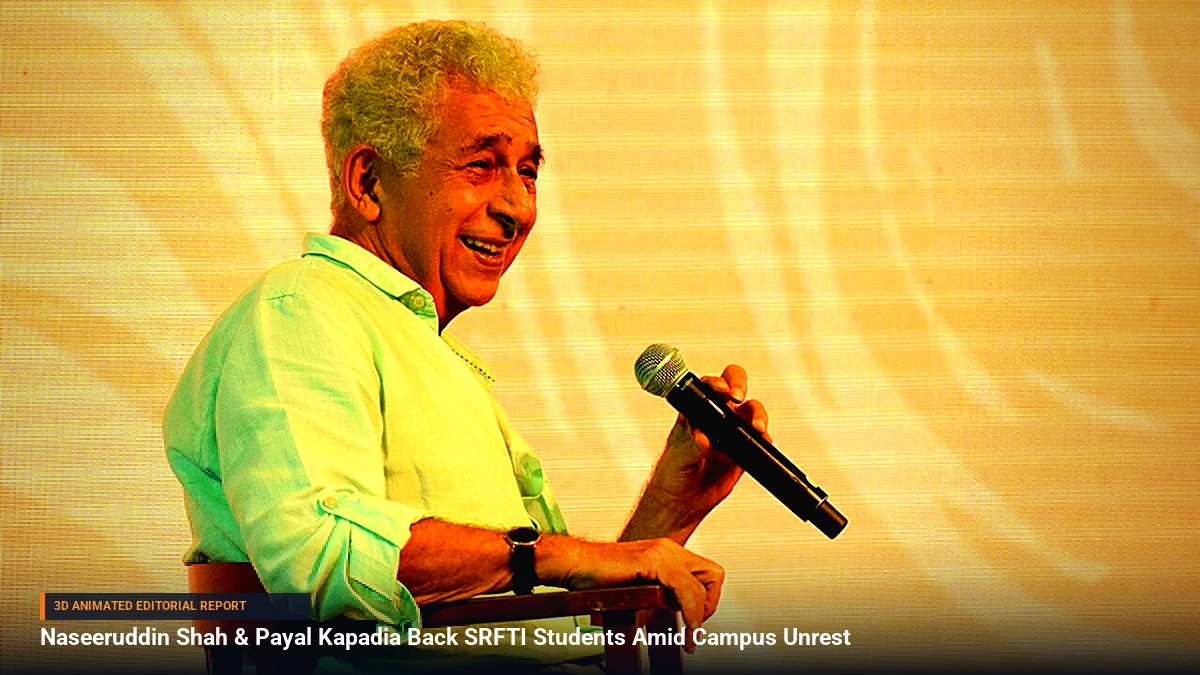
Tensions at the Satyajit Ray Film and Television Institute (SRFTI) in Kolkata have escalated sharply, drawing the attention of prominent figures in Indian cinema. Veteran actor Naseeruddin Shah and award-winning filmmaker Payal Kapadia have stepped forward to express public solidarity with the student body currently leading an aggressive campus agitation.
The protests, centered around severe infrastructural grievances including an ongoing water crisis and a shutdown of the campus mess facility, have brought daily academic operations to a near standstill. In response to the escalating protests, the institute's administration has taken the step of urging parents to take their protesting wards home, a move that critics argue attempts to deflate momentum rather than address root grievances.
Taking direct aim at the ruling political establishment, Naseeruddin Shah did not mince words during his intervention. He openly criticized the Bharatiya Janata Party (BJP), characterizing the ruling party with harsh terms and accusing them of orchestrating a political vendetta against the student community and campus autonomy.
Background & Key Context
SRFTI, established as a premier national center for film and television training, has historically experienced periods of student activism tied to administrative transparency, resource allocation, and freedom of expression. Film institutes in India frequently serve as cultural barometers where creative freedom and institutional management collide.
The latest wave of unrest stems from tangible, day-to-day welfare concerns—most notably essential services like clean water access and functional dining halls. However, the involvement of celebrated cinematic voices has rapidly elevated the local administrative dispute into a broader national discourse concerning freedom of speech, institutional governance, and the political climate surrounding educational campuses across India.
Key Takeaways
- High-Profile Solidarity: Veteran actor Naseeruddin Shah and acclaimed director Payal Kapadia have publicly backed agitating SRFTI students in Kolkata.
- Core Grievances: The protests were triggered by pressing campus issues, including a severe water crisis and a closed student mess.
- Administrative Pushback: Institute authorities have responded by formally advising parents to escort protesting students back to their respective homes.
- Political Friction: Shah launched a scathing critique of the BJP, labeling the party over alleged political vendettas targeting the academic unrest.
- Counter-Response: Local political leadership fired back at Shah, with a BJP MLA dismissing his criticisms by alleging he opposes the party 'by lineage.'
Impact, Analysis & Global/National Reactions
The convergence of artistic icons and student activism has transformed a localized administrative standoff into a national flashpoint. Payal Kapadia’s endorsement carries significant weight given her recent international acclaim, bringing global visibility to the domestic struggles faced by students in Indian creative institutions.
Political reactions were swift. Following Shah’s scathing remarks labeling the ruling party, local political stakeholders offered sharp dismissals. A BJP MLA publicly retaliated against the veteran actor's commentary, suggesting that his political opposition is rooted in ideological bias rather than objective critique. Analysts note that such friction underscores the deep polarization surrounding cultural institutions and public figures who choose to wade into political controversies.
What's Next: Looking Ahead
As the administrative deadlock persists, all eyes remain on how SRFTI authorities will manage the operational crises of water access and mess facilities. With parents caught between institutional directives and student resolve, the coming days will likely determine whether constructive dialogue can replace the escalating rhetoric or if the campus unrest will deepen further.





Be the first to comment
Start a useful conversation around this story.