
What Happened: The Core Developments
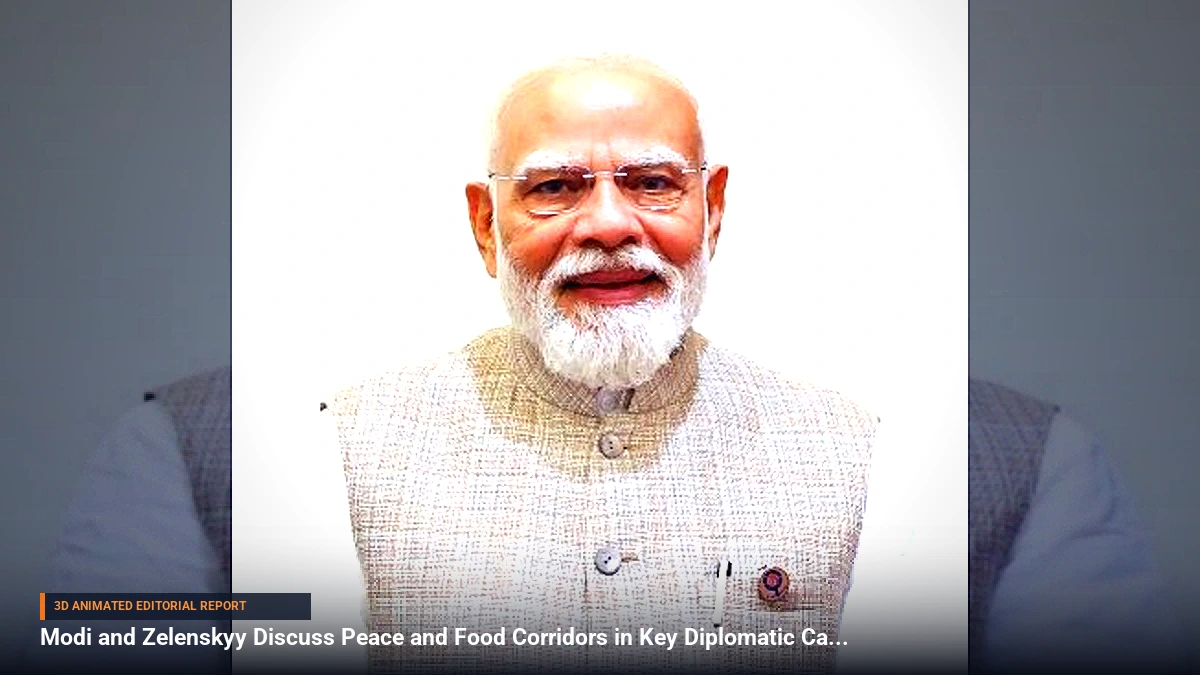
Indian Prime Minister Narendra Modi engaged in a crucial diplomatic conversation with Ukrainian President Volodymyr Zelenskyy, focusing on bilateral cooperation and comprehensive pathways toward resolving the Russia-Ukraine conflict. During the dialogue, Prime Minister Modi firmly reiterated New Delhi's steadfast position that the crisis cannot be solved on the battlefield and must be addressed through sincere dialogue and active diplomacy.
In the wake of the discussions, Ukrainian leadership noted prospective collaborative steps, with President Zelenskyy stating that India is prepared to assist in establishing a secure food corridor through the Black Sea. This potential logistical and humanitarian undertaking underscores how regional supply chains and global food security remain deeply intertwined with diplomatic engagements involving major Global South economies like India.
Background & Key Context
India has carefully navigated a complex diplomatic tightrope since the outbreak of full-scale hostilities between Russia and Ukraine. Maintaining long-standing, robust strategic and economic partnerships with Moscow—particularly regarding energy imports and defense procurement—New Delhi has simultaneously deepened humanitarian commitments to Kyiv and consistently championed international law, sovereignty, and peaceful conflict resolution.
Prime Minister Modi has previously engaged directly with both Russian President Vladimir Putin and President Zelenskyy, visiting Kyiv and Moscow in recent months to promote face-to-face negotiations. India's strategy centers on positioning itself not as a mediator dictating terms, but as a trusted interlocutor willing to facilitate communication channels between the warring nations and support global mitigation efforts against the war's economic fallout.
Key Takeaways
- Consistent Stance: Prime Minister Modi reaffirmed India's unwavering commitment to dialogue, diplomacy, and a peaceful resolution to the conflict.
- Bilateral Expansion: Both leaders agreed to further strengthen multi-sectoral cooperation between India and Ukraine.
- Black Sea Food Corridor: President Zelenskyy highlighted India's potential involvement in setting up a vital maritime food transit corridor.
- Humanitarian Focus: Discussions emphasized alleviating civilian hardships and safeguarding international food security supplies.
- Strategic Balancing: The call reflects India's ongoing pursuit of an independent foreign policy maintaining positive ties with all major global players.
Impact, Analysis & Global/National Reactions
International relations experts view the Modi-Zelenskyy dialogue as an incremental yet significant step in shaping the diplomatic landscape surrounding the war. By maintaining an open channel with Kyiv, New Delhi demonstrates that its neutrality is active rather than passive. The discussion around the Black Sea food corridor, in particular, signals a willingness from Ukrainian leadership to leverage India's diplomatic capital to stabilize global agricultural markets.
While critics occasionally question the feasibility of India's multi-alignment strategy, Western and Global South capitals increasingly recognize New Delhi's unique capability to convey messages across opposing geopolitical divides. The dialogue reinforces the notion that emerging economies will play an indispensable role in eventual post-conflict reconstruction and humanitarian relief frameworks.
What's Next: Looking Ahead
As diplomatic maneuvers continue behind the scenes, attention will shift toward how concrete proposals—such as the Black Sea food corridor initiative—are operationalized through multilateral channels. Observers will closely monitor upcoming international summits and bilateral exchanges to see if India's persistent advocacy for peace talks yields actionable frameworks for a negotiated settlement between Kyiv and Moscow.
Be the first to comment
Start a useful conversation around this story.