
What Happened: The Core Developments
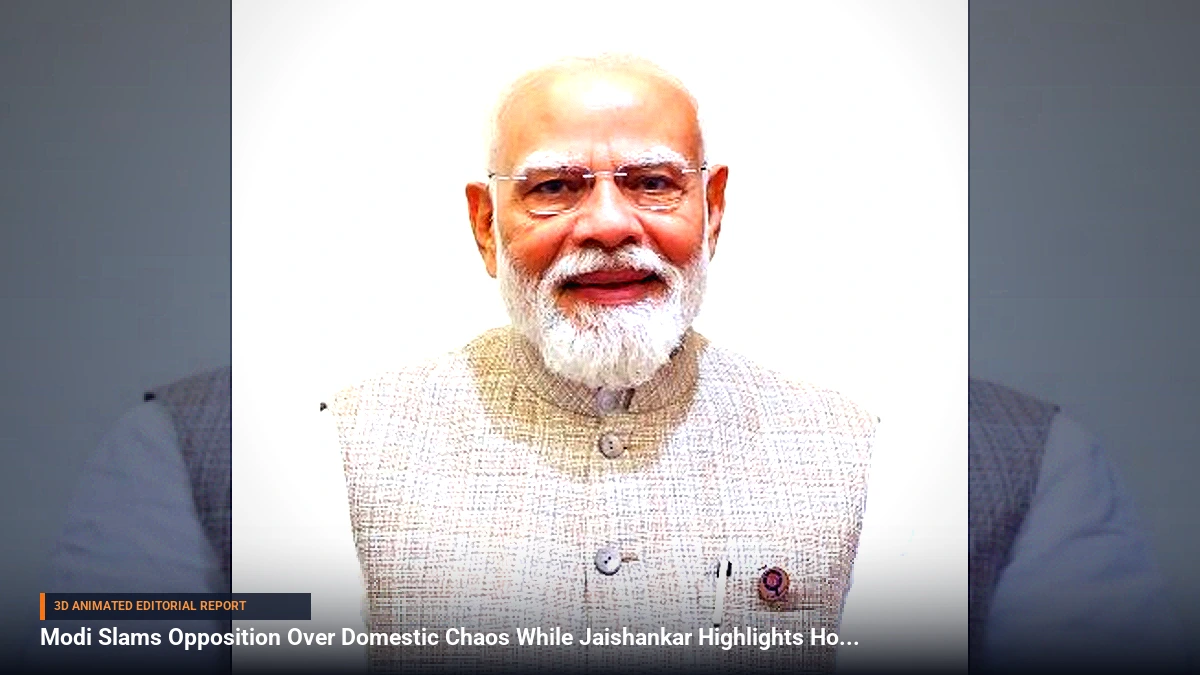
India has found itself navigating a complex matrix of intense domestic political friction and high-stakes international diplomacy. Prime Minister Narendra Modi launched a scathing attack on domestic political opponents, accusing them of actively attempting to orchestrate anarchy and chaos within the country at a time when the world navigates severe international turbulence. Addressing a large gathering, the Prime Minister framed the political resistance as a targeted campaign to defame his administration rather than engage in constructive governance.
Simultaneously, the Prime Minister inaugurated, laid foundation stones, and dedicated a vast slate of infrastructure and development projects valued at over ₹14,000 crore in Banaskantha, Gujarat. Modi used the platform to reinforce his long-term commitment to public service, declaring that he would dedicate every remaining breath of his life to the welfare and upliftment of Indian citizens.
On the global stage, India's diplomatic machinery was equally active. During deliberations at the G20 Foreign Ministers' meeting, External Affairs Minister S. Jaishankar raised sharp concerns regarding escalating maritime security threats. He explicitly flagged perilous attacks on commercial shipping vessels and Indian seafarers navigating the volatile Strait of Hormuz region, drawing direct attention to the disproportionate fallout experienced by emerging economies.
Background & Key Context
The dual developments highlight the overlapping pressures confronting New Delhi as domestic electoral and political maneuvers intersect with volatile geopolitical realities. Domestically, the ruling administration continues to face aggressive pushback from a unified opposition bloc over various economic and administrative policies. Modi's recent assertions lean into a familiar political narrative that frames internal dissent not merely as democratic opposition, but as an existential disruption to national stability during vulnerable global periods.
Externally, India's foreign policy posture has increasingly pivoted toward protecting critical maritime trade routes and energy supply corridors. The Strait of Hormuz remains a vital chokepoint for global petroleum flows and maritime commerce, directly impacting India's domestic energy security and economic growth trajectory. EAM Jaishankar’s intervention at the G20 underscores New Delhi's growing assertiveness in advocating for the Global South, linking local vulnerabilities—such as the safety of Indian sailors—to systemic global supply chain stability.
Key Takeaways
- Domestic Confrontation: Prime Minister Modi accused opposition factions of fostering national instability and engineering chaos amid international uncertainty.
- Massive Infrastructure Push: Projects exceeding ₹14,000 crore were inaugurated or initiated by the Prime Minister during his visit to Banaskantha, Gujarat.
- Maritime Security Warnings: EAM S. Jaishankar formally addressed the security of ships and Indian seafarers in the Hormuz region during high-level G20 discussions.
- Energy Vulnerability Focus: Jaishankar warned international partners about looming global energy supply disruptions, urging immediate multilateral action.
- Advocating for the Global South: India continues to position itself as a vocal champion for developing nations bearing the brunt of maritime and supply chain crises.
Impact, Analysis & Global/National Reactions
Political analysts note that the simultaneous escalation of domestic rhetoric and high-level international diplomacy reflects a government attempting to project strength on two distinct fronts. By coupling heavy developmental investments in states like Gujarat with a combative stance against domestic critics, the leadership aims to shore up its grassroots political base.
Conversely, Jaishankar’s uncompromising posture at the G20 demonstrates India's strategic autonomy and its readiness to call out international security deficits that threaten its national workforce and economic lifelines. Diplomatic observers point out that highlighting threats to Indian seafarers moves abstract geopolitical debates into tangible, human-centric security challenges that demand multilateral cooperation.
What's Next: Looking Ahead
As the domestic political landscape gears up for upcoming legislative cycles and continuous state-level engagement, the friction between the ruling party and the opposition is expected to intensify. Observers will monitor whether the opposition adopts a coordinated counter-strategy to address the Prime Minister's allegations of manufactured anarchy.
Internationally, India's diplomatic corps will continue leveraging multilateral platforms like the G20 and bilateral engagements—including Quad dialogues—to press for actionable frameworks safeguarding maritime chokepoints. Stakeholders in the energy and shipping sectors will closely track whether Jaishankar's warnings translate into tangible naval security arrangements or policy adjustments in the Hormuz region.



Be the first to comment
Start a useful conversation around this story.