
What Happened: The Core Developments
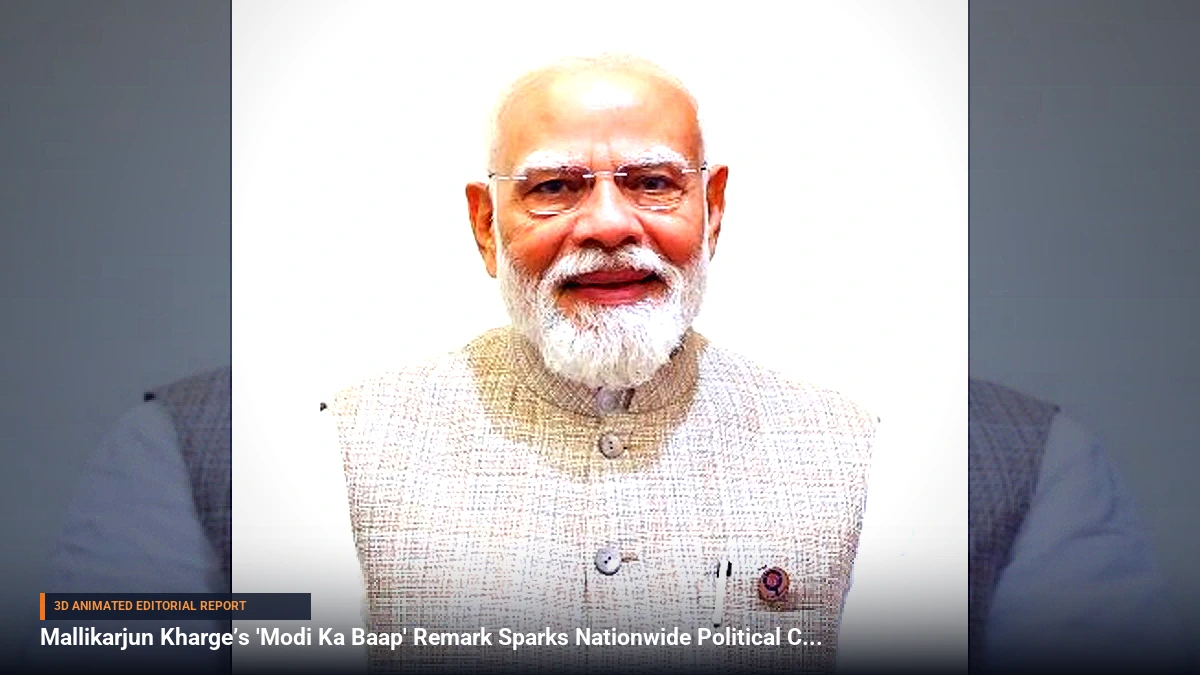
A fresh political storm has engulfed India’s national landscape following a controversial statement made by Congress president Mallikarjun Kharge. During a high-stakes political address, Kharge used the phrase "Modi ka baap," a colloquial expression that quickly became the center of a severe political controversy. The remark was seized upon by the ruling Bharatiya Janata Party (BJP), which condemned the comment as an insult to the office of the Prime Minister and launched a coordinated campaign demanding accountability from the opposition leadership.
In response to the escalating rhetoric, the BJP leadership announced plans for nationwide protests, mobilizing party cadres to register their strong disapproval of what they termed unparliamentary and disrespectful language used against the nation's leader. Meanwhile, the Indian National Congress has stood its ground, shifting focus toward broader institutional and electoral demands, including calls for the rollback of Special Intensive Revision (SIR) procedures and a return to traditional ballot paper voting systems.
Background & Key Context
Indian politics has long witnessed sharp verbal exchanges between the ruling establishment and the opposition, but the intensity of recent discourse underscores a deep ideological and electoral polarization. The Congress party's concurrent demands for systemic changes—such as questioning electronic voting mechanisms and challenging administrative revision processes—reflect a concerted effort to recalibrate the electoral playing field ahead of crucial political milestones.
This latest flashpoint builds on a series of ongoing disputes regarding institutional credibility, election administration, and political decorum. As parties prepare for upcoming electoral battles across various states, rhetorical escalations frequently serve to mobilize core voter bases, often sidelining policy debate in favor of intense personality-driven confrontations.
Key Takeaways
- Controversial Jibe: Congress president Mallikarjun Kharge sparked a major political uproar with his remark involving the phrase "Modi ka baap."
- BJP's Counter-Offensive: The ruling party denounced the comment as a personal insult to Prime Minister Narendra Modi and called for widespread nationwide demonstrations.
- Escalated Rhetoric: Senior BJP leaders, including Union Home Minister Amit Shah, sharply criticized the conduct of top Congress leadership, accusing them of dragging political discourse to an unprecedented low.
- Electoral Demands: Diverting attention from the verbal duel, the Congress party reiterated its demand for a rollback of the SIR and a complete return to ballot papers.
- Deepening Polarization: The incident highlights the growing friction between national political parties as they lock horns over institutional norms and electoral integrity.
Impact, Analysis & Global/National Reactions
The immediate fallout of Kharge's comment demonstrates how quickly localized campaign rhetoric can transform into a national crisis. Political analysts note that such controversies serve a dual purpose for political parties: they energize core supporters while forcing opponents onto the defensive.
Senior BJP figures, including Amit Shah, publicly targeted opposition leaders like Rahul Gandhi, questioning the underlying culture and conduct of the grand old party. The ruling party argues that personal attacks on the Prime Minister reflect a bankruptcy of constructive policy ideas within the opposition ranks. Conversely, Congress supporters and leaders maintain that their remarks are often taken out of context by a partisan machinery designed to deflect public attention away from critical governance issues and administrative transparency concerns.
What's Next: Looking Ahead
As the BJP rolls out its nationwide protests, political observers expect the standoff to dominate news cycles and legislative sessions in the coming weeks. The ability of both parties to balance aggressive campaigning with substantive policy debate will be heavily scrutinized.
Additionally, the Congress party's persistent demands regarding electoral reforms, SIR rollbacks, and ballot paper utilization are likely to remain contentious talking points in interactions with election authorities. Whether this rhetorical escalation translates into measurable shifts in voter sentiment will become clearer as state-level campaigns intensify and institutional stakeholders respond to ongoing opposition memorandums.


Be the first to comment
Start a useful conversation around this story.