
What Happened: The Core Developments
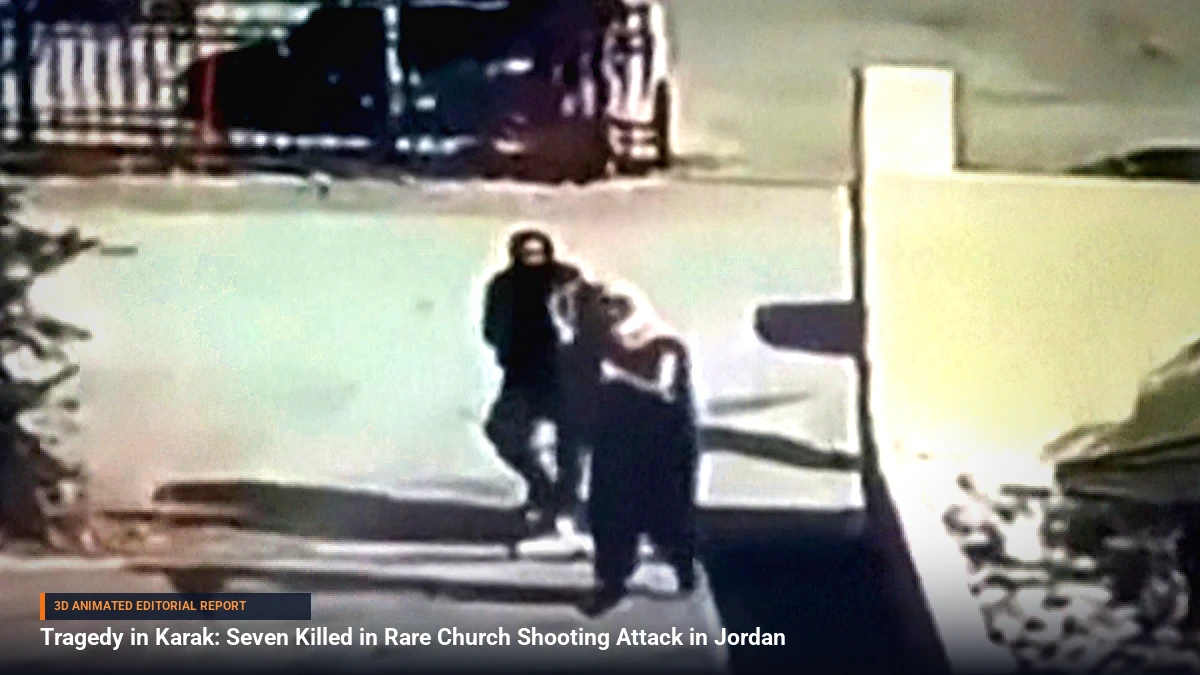
A peaceful mourning service turned into a scene of absolute devastation when a mass shooting occurred at a church in Karak, Jordan. According to verified reports from authorities and international news outlets, at least seven individuals lost their lives and 34 others sustained varying injuries after two masked gunmen stormed the premises.
The assailants targeted a church funeral, transforming a solemn community gathering into a chaotic mass-casualty incident. Emergency services and security forces rushed to the site to treat the wounded, secure the perimeter, and launch an immediate manhunt for the perpetrators. The high number of casualties has overwhelmed local medical facilities, prompting emergency blood drives and national mobilization.
Background & Key Context
Jordan has historically maintained a reputation as one of the most stable and secure nations in the volatile Middle East. While the country has occasionally faced localized security threats and counter-terrorism operations, large-scale attacks targeting houses of worship—particularly during sensitive community gatherings like funerals—are exceedingly rare.
The city of Karak, located south of the capital Amman, carries deep historical significance and is known for its diverse social fabric where Christian and Muslim communities coexist peacefully. Incidents of sectarian or targeted violence against religious institutions are stark departures from the nation's normal sociopolitical landscape, sending profound shockwaves through the country's citizenry.
Key Takeaways
- High Casualties: At least seven people were killed and 34 wounded in the sudden assault.
- Targeted Location: The attack took place inside a church during a funeral service in Karak, Jordan.
- Masked Perpetrators: Security officials confirmed that at least two masked gunmen carried out the operation.
- Fierce State Response: King Abdullah II has vowed the "harshest retaliation" against those responsible.
- Ongoing Investigation: Authorities are actively working to uncover the identities, motives, and potential ideological ties of the attackers.
Impact, Analysis & Global/National Reactions
The attack has sent immediate shockwaves through Jordanian society and the wider international community. Because Jordan acts as a crucial strategic anchor of stability in the region, any breach of internal security of this magnitude draws intense global scrutiny.
In response to the tragedy, Jordan's King stepped forward with an uncompromising stance, vowing the "harshest retaliation" against the perpetrators and anyone found to be backing them. Political analysts note that the swift and severe rhetoric from the monarchy is designed to reassure the public, maintain social cohesion, and demonstrate that the state's security apparatus remains firmly in control.
Community leaders, civil society organizations, and religious figures across the region have also united in condemnation, emphasizing that acts of violence against houses of worship are an assault on the fundamental values of humanity and national unity.
What's Next: Looking Ahead
As the investigation unfolds, all eyes remain on the Jordanian security forces and intelligence agencies to apprehend the remaining suspects and clarify the underlying motives behind the assault. Stakeholders will be closely monitoring how the government balances its security crackdown with the preservation of civil liberties and national harmony.
Furthermore, heightened security protocols are expected to be implemented around religious sites and public gatherings across the kingdom to deter copycat threats and restore public confidence. Future official briefings are anticipated to shed more light on the organizational background of the attackers and the long-term domestic policy implications for Jordan's internal security framework.



Be the first to comment
Start a useful conversation around this story.