
What Happened: The Core Developments
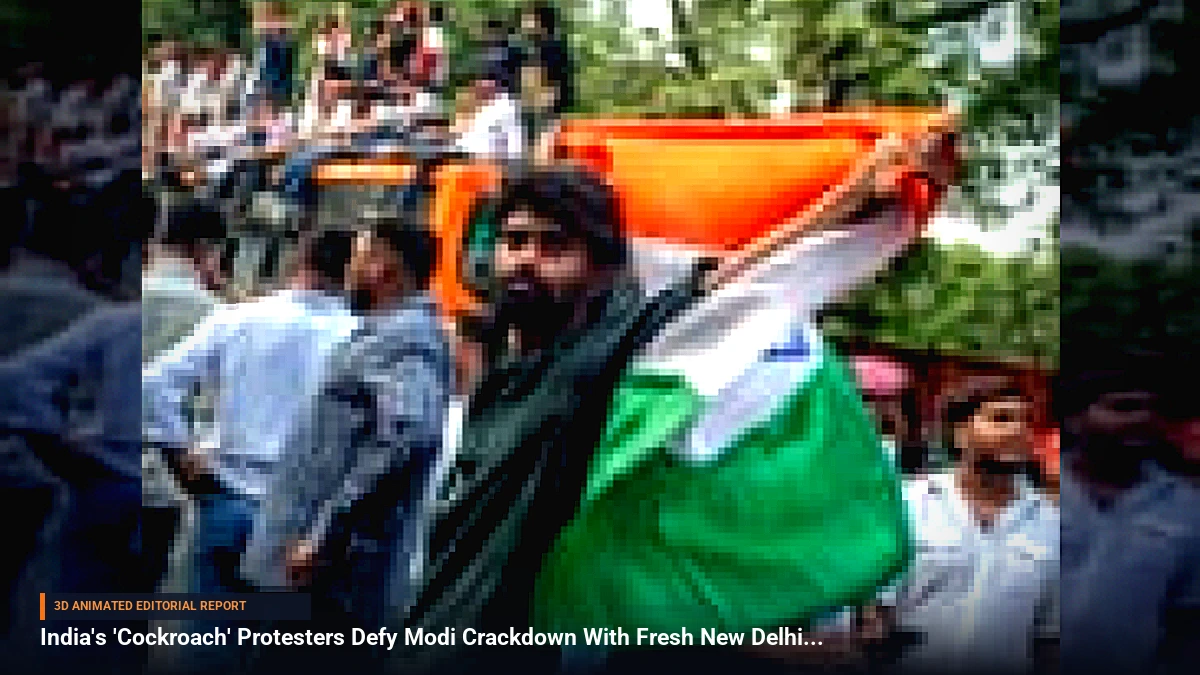
India's capital is bracing for renewed civil unrest as the youth-led 'Cockroach' movement presses forward with plans for a fresh protest in Delhi. This defiance comes directly on the heels of a aggressive police crackdown and widespread detentions that targeted organizers last week. Authorities have taken aggressive measures to preemptively neutralize the demonstrations, including the closure of the historic Connaught Place Central Park protest site for a two-day lockdown ahead of a planned 'Tiranga' march.
The state's suppression efforts have directly impacted the movement's leadership. Two prominent figures associated with the collective were recently imprisoned for five days on charges of violating strict assembly and suppression measures. Despite these heavy-handed interventions, organizers remain resolute, asserting that decentralized, resilient tactics allow the movement to persist against state opposition.
Background & Key Context
The genesis of the 'Cockroach' movement lies in deep-seated socioeconomic grievances. The collective originally emerged out of widespread youth frustration regarding chronic unemployment and a hyper-competitive, overburdened education system. However, as the movement matured and faced mounting administrative hurdles, its scope widened dramatically.
Today, the protests have pivoted from localized economic demands to core constitutional principles, centering specifically on the preservation of voting rights and democratic accountability. This escalation places the movement on a direct collision course with the administration of Prime Minister Narendra Modi, as protesters accuse the government of pushing policies that threaten to disenfranchise millions of citizens.
Key Takeaways
- Resilient Mobilization: The youth-led 'Cockroach' movement is planning fresh demonstrations in Delhi despite heavy police crackdowns and mass detentions.
- Strategic Shifts: The protests have evolved from initial economic concerns over jobs and education into a targeted campaign defending voting rights.
- State Suppression: Authorities shut down central Delhi's historic Connaught Place Central Park and jailed two key leaders for five days to suppress the movement.
- Government Denial: Prime Minister Narendra Modi's administration has firmly denied allegations that its policies seek to disenfranchise millions of voters.
- Global Condemnation: The state's aggressive handling of peaceful demonstrators has drawn sharp rebukes from the United Nations and Amnesty International.
Impact, Analysis & Global/National Reactions
The escalation in Delhi highlights a growing friction point between modern democratic expression and heavy-handed governance in South Asia's largest democracy. Political analysts note that the moniker 'Cockroach' embraces the resilient, decentralized nature of the decentralized youth network—signaling that whenever one gathering is crushed or dispersed, multiple nodes inevitably reappear.
International bodies have closely monitored these developments with mounting alarm. Human rights watchdogs, including Amnesty International and representatives from the United Nations, have openly criticized the Indian government's heavy-handed tactics, warning that mass detentions and the suppression of peaceful assemblies contribute to a worrying democratic backsliding and an institutional drift toward autocracy. Conversely, state defenders maintain that these security restrictions are vital for maintaining public order and preventing engineered civil disruption.
What's Next: Looking Ahead
As the 'Cockroach' movement organizes its next phase of resistance, all eyes remain on Delhi's streets and the judicial system. Key questions linger regarding how law enforcement will handle upcoming public gatherings, especially as authorities attempt to restrict flag-waving events to select, vetted groups. Civil rights attorneys are preparing legal challenges against the recent detentions, setting the stage for a prolonged legal and political showdown over the boundaries of free speech and electoral integrity in India.

Be the first to comment
Start a useful conversation around this story.