
What Happened: The Core Developments
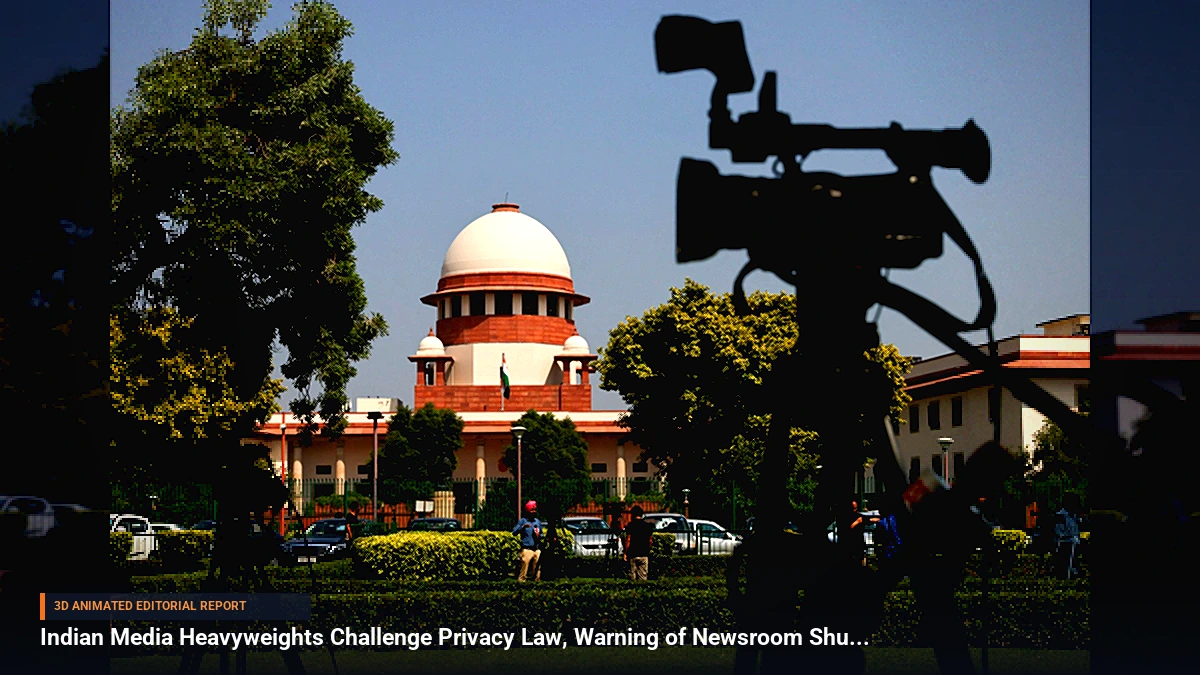
A coalition of prominent Indian media organizations has formally filed a landmark challenge against the country's Digital Personal Data Protection (DPDP) Act in the Supreme Court. The legal onslaught brings together a diverse array of publishers—including outlets backed by major business houses such as Reliance Industries' Ambani group and the Adani-owned networks alongside independent publishing entities—united by a common apprehension.
The petitioners argue that the compliance mandates and enforcement mechanisms embedded within the privacy statute create an environment hostile to traditional reporting. Specifically, newsroom leaders and legal representatives claim that the broad scope of data protection obligations could inadvertently criminalize routine journalistic inquiries, undermine the legal protection of confidential whistleblowers, and ultimately trigger crippling operational disruptions or outright shutdowns across national media houses.
Background & Key Context
The clash between statutory privacy regulations and the Fourth Estate marks a significant chapter in India's evolving regulatory landscape. Enacted to safeguard individual citizens' digital privacy rights, the DPDP Act grants extensive controls to data principals over how their personal information is collected, processed, and stored.
However, from the inception of the legislative drafting process, media advocacy groups and editors' guilds cautioned that a blanket application of data protection rules to the news media would create insurmountable hurdles. Investigative journalism inherently relies on gathering, cross-referencing, and retaining sensitive personal information—often without the explicit, formal consent of the subjects under scrutiny, particularly when those subjects are implicated in corruption, corporate malfeasance, or abuse of public office. The latest Supreme Court petition escalates these theoretical policy warnings into a formal, high-stakes judicial battle.
Key Takeaways
- Supreme Court Challenge: Major Indian media conglomerates, spanning independent outlets and major corporate-backed publishers, have petitioned the top court over the DPDP Act.
- Operational Threat: Petitioners warn that compliance strictures could paralyze newsrooms and increase the risk of operational shutdowns.
- Investigative Impairment: Media groups argue the law severely compromises investigative reporting and the vital protection of confidential sources.
- Government Stance: Union IT and Information & Broadcasting Minister Ashwini Vaishnaw has firmly asserted that the privacy legislation does not infringe upon press freedom.
- Judicial Scrutiny: The Supreme Court has sought responses from the central government, setting the stage for a critical constitutional debate on privacy versus free speech.
Impact, Analysis & Global/National Reactions
The legal showdown underscores a profound tension between two foundational pillars of a modern democracy: the fundamental right to individual privacy and the public's right to information facilitated by a free press. Legal analysts note that if the statute is applied without tailored journalistic exemptions, reporters could find themselves legally exposed for merely processing identifying data during investigative deep-dives.
Conversely, the federal government remains steadfast in its defense of the legislative framework. Union IT and Information & Broadcasting Minister Ashwini Vaishnaw has publicly rejected the notion that the statute curbs editorial independence, maintaining that the legislation is designed strictly to protect citizen data without stifling legitimate media functions. The Supreme Court's decision to examine the matter has drawn intense international attention, serving as a barometer for how emerging democracies balance digital-age data governance with democratic accountability.
What's Next: Looking Ahead
As the Supreme Court begins its substantive review of the petitions, all eyes will be on the bench's interim observations and whether it decides to issue notices or interim protections for journalists and media houses.
Legal experts anticipate that the proceedings will require the judiciary to carve out precise legal definitions or demand statutory amendments that harmonize data privacy compliance with the constitutional imperatives of free expression. For Indian newsrooms, the outcome will dictate the legal boundaries of investigative reporting for years to come.



Be the first to comment
Start a useful conversation around this story.