
What Happened: The Core Developments
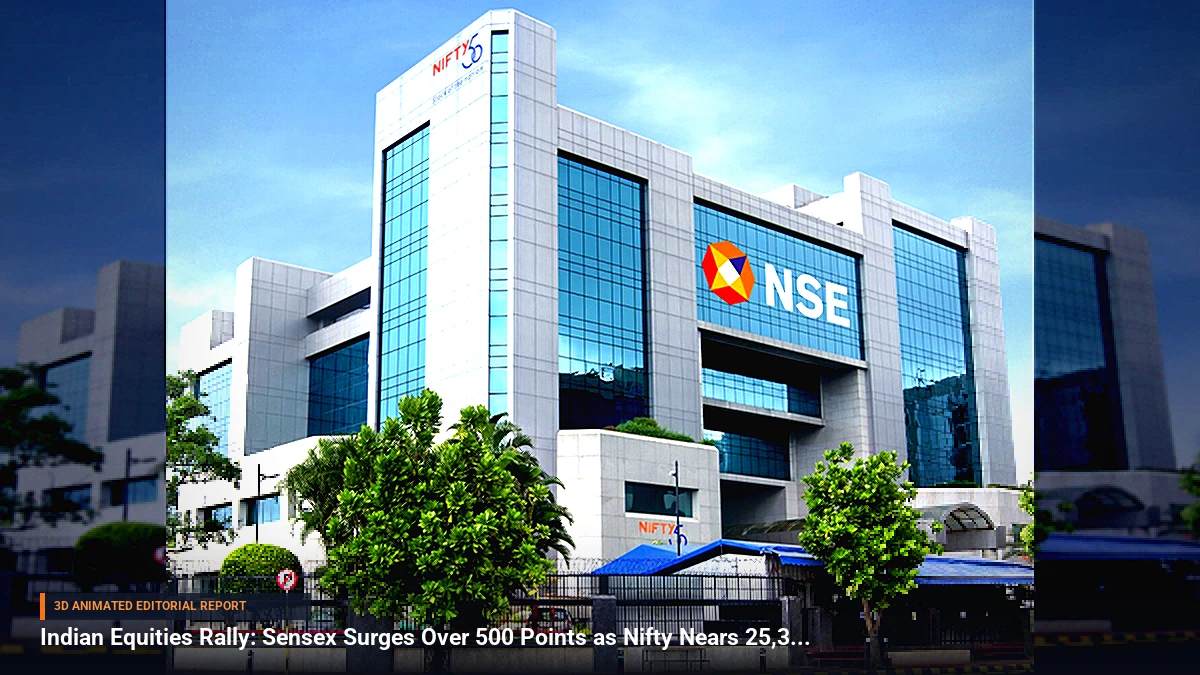
Indian equity markets demonstrated considerable resilience, staging a sharp rebound that captured the attention of financial analysts and retail investors alike. The benchmark BSE Sensex surged by more than 500 points during the sessions, while the NSE Nifty closed near the crucial 25,300 threshold. Market participation was broad-based, with heavyweights across the information technology, banking, and fast-moving consumer goods (FMCG) sectors spearheading the upward trajectory.
Despite fluctuating early indicators—such as mixed signals from the GIFT Nifty pointing toward cautious or muted openings—domestic indices quickly gained traction. Buyers stepped in aggressively during early trades, allowing Dalal Street to temporarily decouple from sluggish or negative cues originating from broader Asian and Western markets.
Background & Key Context
This recent market bounce follows a period of heightened volatility characterized by inflation anxieties and shifting global liquidity dynamics. Historically, Indian indices have shown high sensitivity to fluctuations in international energy benchmarks and foreign portfolio flows. In recent weeks, persistent concerns over wholesale price inflation (WPI) and variable institutional sentiment had kept midcaps and smallcaps under pressure, resulting in an uneven market breadth where headline indices often masked underlying segment-specific weaknesses.
The confluence of falling crude oil prices—which directly benefits India's import-heavy macroeconomic ledger—and a steady return of foreign institutional investor (FII) capital provided the vital catalyst needed to reverse the preceding downturn.
Key Takeaways
- Headline Gains: The BSE Sensex rallied by over 500 points, while the Nifty 50 comfortably settled near the 25,300 mark.
- Sectoral Drivers: IT, banking, and FMCG counters led the charge, driving the bulk of the market momentum.
- Macro Support: Falling global crude oil prices eased macroeconomic pressure, bolstering investor sentiment.
- Foreign Participation: Renewed inflows from foreign institutional investors (FIIs) acted as a primary engine for the rally.
- Underlying Divergence: Despite the strong headline recovery, broader market breadth revealed lingering weakness in select midcap and smallcap segments.
Impact, Analysis & Global/National Reactions
Financial analysts noted that the ability of Indian indices to rally in the face of negative or mixed global cues underscores the structural strength of domestic liquidity. Institutional experts pointed out that easing commodity and crude prices offer substantial breathing room for corporate margins, particularly within consumer goods and manufacturing sectors.
"The ability of D-Street to shrug off weak global sentiment highlights the growing cushion provided by domestic institutional and retail participation, alongside supportive foreign inflows," noted market strategists tracking the movement. While large-cap counters benefited immensely from institutional buying, market observers caution that investors remain selective, keeping a close eye on upcoming macroeconomic prints and corporate earnings trajectories before committing capital to riskier mid-tier equities.
What's Next: Looking Ahead
As markets transition into the next trading cycles, participants will closely monitor upcoming domestic inflation data, currency fluctuations, and daily FII/DII activity logs. While the immediate technical outlook for the Nifty remains constructive near the 25,300 zone, traders are advised to watch for sustainability above key resistance levels. Global macroeconomic data releases, including US central bank commentary and international energy supply updates, will continue to dictate whether domestic equities can maintain their decoupled upward momentum.





Be the first to comment
Start a useful conversation around this story.