
What Happened: The Core Developments
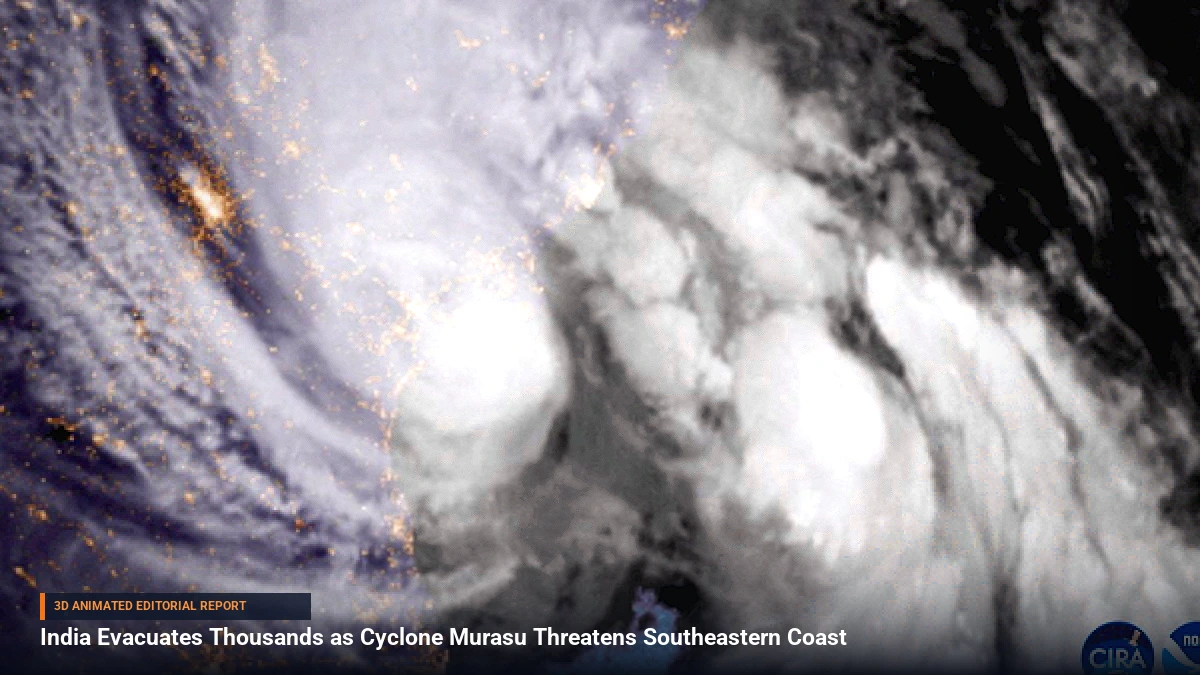
Emergency response teams and local authorities in southeastern India are engaged in large-scale evacuations as Cyclone Murasu approaches the coast. Meteorological forecasts indicate the storm is on track to make landfall near the coastal town of Ongole in Andhra Pradesh, bringing destructive winds and torrential downpours.
With sustained winds projected to range between 100 and 120 kilometers per hour (62 to 75 mph), the storm poses an immediate threat to residential infrastructure, power grids, and low-lying coastal communities. Fishermen have hauled hundreds of boats ashore, while transport authorities have taken proactive measures, including the cancellation of nearly 20 flights in the region, to prevent transit disasters as conditions rapidly deteriorate.
Background & Key Context
The arrival of Cyclone Murasu compounds an already severe humanitarian and logistical challenge for local governments, representing the second tropical cyclone to threaten the region within a compressed seven-day window. Southeastern India's coastal belt is historically vulnerable to severe monsoon-season depressions and cyclonic storms originating in the Bay of Bengal.
However, experiencing back-to-back systems severely strains disaster management frameworks, stretches emergency shelter capacities, and exhausts relief supplies before affected populations can recover from the initial weather event earlier in the week. Disaster response forces have been prepositioned across vulnerable districts in Andhra Pradesh and northern Tamil Nadu, where heavy bands of rain are already lashing coastal neighborhoods.
Key Takeaways
- Mass Evacuations: Thousands of vulnerable residents are being moved to secure relief shelters ahead of the storm's landfall.
- Severe Wind Threat: Meteorological departments forecast peak wind speeds reaching 100 to 120 km/h near the impact zone.
- Primary Landfall Zone: Cyclone Murasu is expected to cross the coast near Ongole in Andhra Pradesh.
- Compounding Crises: This represents the second major cyclone threat to strike the southeastern seaboard within a single week.
- Transport Disruption: Local authorities have canceled numerous domestic flights and grounded regional fishing fleets to ensure public safety.
Impact, Analysis & Global/National Reactions
Disaster management authorities have activated emergency protocols across multiple districts, urging residents in flood-prone and fragile housing structures to comply with mandatory evacuation orders. The compounding nature of these successive weather patterns has reignited discussions among climate analysts regarding the increasing frequency and intensity of Bay of Bengal storm systems.
Institutional disaster response units, including state and national disaster relief forces, remain on high alert. Government officials emphasize that minimizing loss of life remains the top priority, prompting preemptive utility shutdowns in high-risk zones to mitigate electrocution hazards and structural fires as high-velocity winds arrive.
What's Next: Looking Ahead
As Cyclone Murasu makes its final approach and moves inland, emergency services will shift from preemptive evacuation to search, rescue, and immediate relief operations. State and federal agencies are preparing to deploy medical teams, food supplies, and temporary shelter materials to areas cut off by flooding or wind damage.
Longer-term evaluations will focus on assessing agricultural losses, repairing critical coastal infrastructure, and reviewing the cumulative economic toll of consecutive weather disasters on regional livelihoods.





Be the first to comment
Start a useful conversation around this story.