
What Happened: The Core Developments
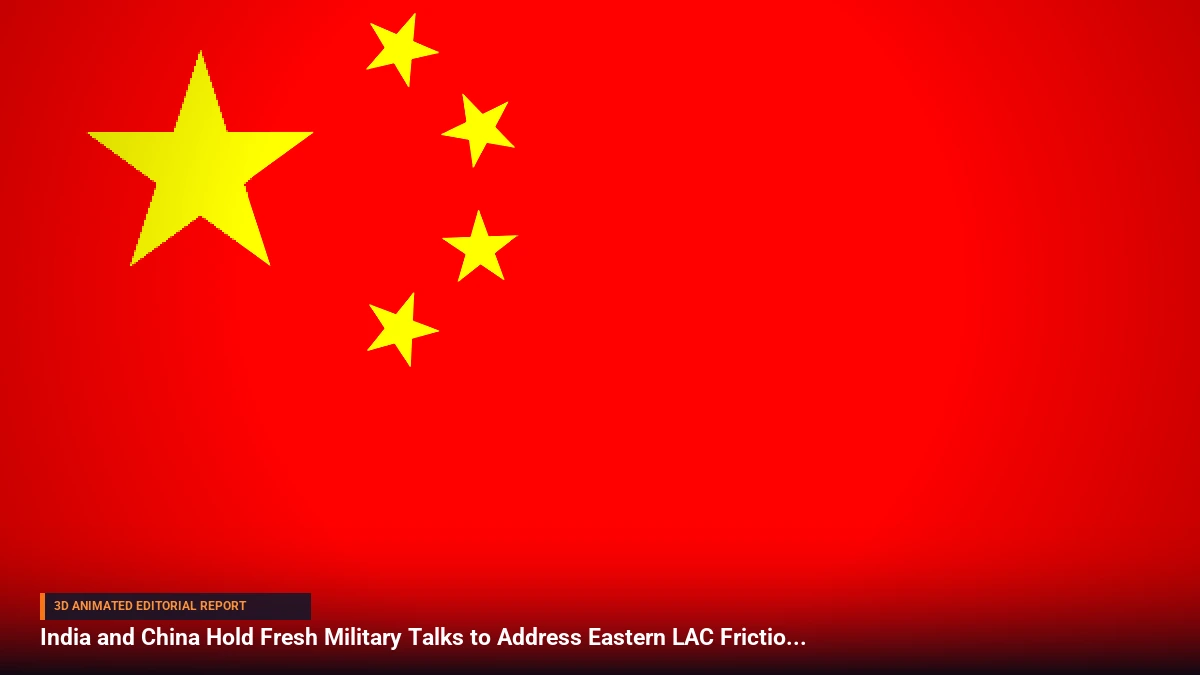
New Delhi and Beijing have engaged in another round of high-level military dialogues aimed at addressing longstanding friction points along the Line of Actual Control (LAC). The recent discussions specifically zeroed in on the eastern sector of the border, located in India's Arunachal Pradesh.
India's Ministry of External Affairs (MEA) officially confirmed that the talks took place, highlighting the ongoing diplomatic and defense efforts to untangle complicated territorial deployments. While comprehensive details regarding the exact locations or tactical breakthroughs remain under wraps, the confirmation underscores that both nations maintain active communication channels to manage and de-escalate frontier tensions.
Simultaneously, Chinese official statements described the broader situation along the India-China border regions as "generally stable." This phrasing points to a mutual desire among military leadership to prevent localized standoffs from spiraling into broader strategic escalations, even as fundamental territorial differences remain unresolved.
Background & Key Context
Relations between India and China have experienced severe strain following the 2020 Galwan Valley clash in the western sector of the LAC. That crisis fundamentally altered bilateral ties, prompting massive force mobilizations, infrastructure build-ups, and an intensive series of diplomatic and military commander-level talks.
While previous negotiation rounds primarily focused on western sector flashpoints such as Depsang and Demchok, attention has increasingly turned toward the eastern sector. Arunachal Pradesh has long been a sensitive point of friction, with Beijing claiming parts of the region as South Tibet—a stance firmly and consistently rejected by New Delhi. Managing the eastern frontier requires immense diplomatic bandwidth, careful troop management, and rigorous adherence to previously established border protocols to avoid accidental escalations.
Key Takeaways
- Targeted Focus: Recent military-level talks specifically addressed unresolved issues along the eastern sector of the LAC in Arunachal Pradesh.
- Official Confirmation: India's Ministry of External Affairs verified the occurrence of the dialogue, reaffirming transparency in managing ongoing border friction.
- Beijing's Assessment: Chinese authorities characterized the overall security and operational environment along the frontier as "generally stable."
- Continuous Engagement: The talks represent the continuation of a long-running bilateral dialogue mechanism designed to prevent border skirmishes.
- Broader Implications: Resolving eastern sector friction remains a critical prerequisite for any meaningful normalization of broader diplomatic and economic relations between the two Asian giants.
Impact, Analysis & Global/National Reactions
Strategic analysts view these ongoing military talks through a lens of cautious optimism tempered by deep-seated realism. Maintaining a continuous dialogue structure prevents miscalculations in inhospitable high-altitude terrains where forward-deployed troops operate in close proximity.
International observers closely monitor these interactions, as peace and stability between India and China are vital for regional security, supply chain resilience, and global economic equilibrium. While official statements from Beijing emphasize stability, Indian defense planners continue to emphasize the necessity of complete disengagement and de-escalation across all disputed sectors before normal bilateral ties can resume.
What's Next: Looking Ahead
As both nations prepare for subsequent rounds of diplomatic and military interactions, observers will be watching for concrete indicators of progress on the ground. Key milestones to look for include:
- Further Commander-Level Meetings: Additional dates for Corps-Commander talks to review field-level developments.
- Disengagement Protocols: Potential agreements regarding buffer zones or patrol-sharing frameworks in eastern sector friction points.
- Ministerial Exchanges: Potential bilateral meetings at regional summits that could provide political momentum to military-level negotiations.





Be the first to comment
Start a useful conversation around this story.