
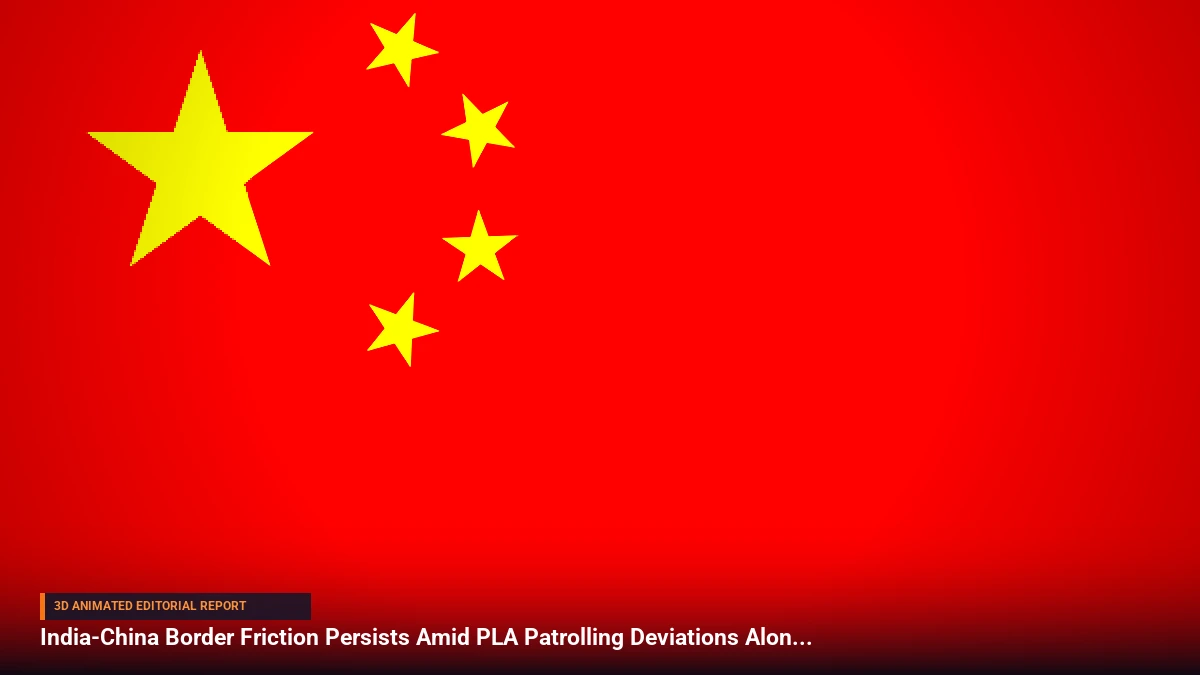
What Happened: The Core Developments
The security dynamics along the contested Line of Actual Control (LAC) remain volatile, according to recent assessments shared by the Indian government and security leadership. Authorities have pointed directly to the patrolling behavior of China's People's Liberation Army (PLA) as the primary catalyst keeping the border region disturbed.
Speaking on the operational realities on the ground, the Director-General of the Indo-Tibetan Border Police (ITBP) reported that tactical face-offs with Chinese forces continue to occur at multiple locations along the Arunachal Pradesh frontier. These localized standoffs underscore the fragile nature of the frontier, where overlapping claims and differing perceptions of the border alignment frequently spark friction.
In response to these developments, the Ministry of External Affairs (MEA) has emphasized that Beijing's departures from established patrolling protocols directly undermine peace and tranquility. Despite these ongoing flashpoints, diplomatic channels remain active. Both New Delhi and Beijing have expressed a willingness to engage in structured dialogue aimed at establishing a clearer, mutually understood framework for managing patrolling rights and preventing inadvertent escalations.
Background & Key Context
The latest security disclosures arrive against the backdrop of long-standing structural disagreements over the nearly 3,500-kilometer border between India and China. While multiple rounds of military commander-level talks and diplomatic consultations have successfully disengaged forces in specific sectors of the Western Himalayas, the Eastern sector—particularly Arunachal Pradesh—continues to experience tactical friction.
Historically, differing perceptions of the LAC have led to regular face-offs when patrolling parties from opposing sides encounter one another in contested zones. The ITBP, which guards the rugged and inhospitable terrain along the border, has continually adapted its operational posture to respond to these challenges. However, shifting PLA tactics, infrastructure build-ups on the Chinese side, and deviations from traditional patrol routes have introduced new complexities to border management.
Key Takeaways
- Persistent Friction: The Indian government attributes ongoing border disturbances primarily to the shifting patrolling patterns of the Chinese PLA.
- Eastern Sector Flashpoints: ITBP leadership confirms that tactical face-offs continue to happen at multiple locations specifically along the Arunachal Pradesh frontier.
- Diplomatic Engagement: The Ministry of External Affairs has reiterated that India and China are actively discussing ways to improve mutual understanding of the LAC.
- Operational Preparedness: Border forces like the ITBP maintain a high state of vigilance and readiness to counter unauthorized incursions or aggressive posturing.
- Long-term Management Goal: Both nations recognize the necessity of refined bilateral mechanisms to ensure better border management and avert tactical miscalculations.
Impact, Analysis & Global/National Reactions
Strategic analysts note that while high-level diplomatic talks are essential for steering long-term peace, tactical-level stability hinges on predictable military behaviors on the ground. The acknowledgement by the Indian government that PLA patrolling anomalies keep the border disturbed signals a clear-eyed assessment of the current state of bilateral ties.
Defense experts suggest that China's incremental pressure along various sectors of the LAC is designed to test Indian resolve and infrastructure capabilities. In response, India has accelerated its own border infrastructure development, ensuring that its security personnel can mobilize rapidly and sustain operations in remote high-altitude regions.
Institutional responses from the MEA reflect a dual-track strategy: maintaining robust defense preparedness while continuing to utilize diplomatic and military dialogue frameworks to negotiate clearer ground rules. By pressing for a shared understanding of the LAC, New Delhi aims to reduce the frequency of face-offs that carry the inherent risk of broader escalation.
What's Next: Looking Ahead
As India and China continue their diplomatic and military engagements, upcoming rounds of talks are expected to focus heavily on establishing mutually agreed guidelines for patrolling. Stakeholders will be closely monitoring whether these discussions can translate into binding operational protocols on the ground.
For the security apparatus, maintaining a formidable deterrence posture along the Arunachal Pradesh frontier and the wider LAC remains the immediate priority. Meanwhile, policymakers will continue to press for transparency and adherence to existing bilateral agreements, seeking to transform a tense frontline into a more predictable and manageable border.




Be the first to comment
Start a useful conversation around this story.