
What Happened: The Core Developments
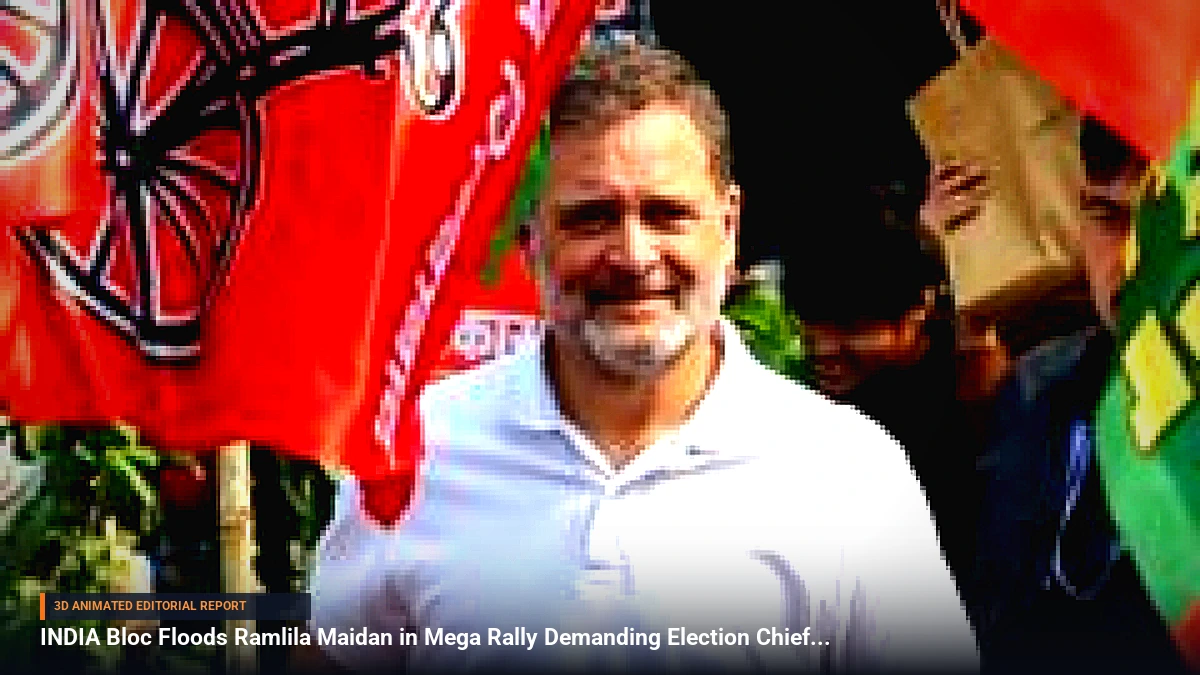
A sea of flags and energetic crowds filled New Delhi's historic Ramlila Maidan as the INDIA opposition bloc staged a high-stakes mega rally. Thousands of supporters alongside leading opposition figures gathered in India's capital to voice fierce discontent over institutional processes. The core rallying cry focused heavily on demands for the resignation of the Chief Election Commissioner (CEC).
Protesters and speakers alike took aim at what they termed systemic electoral bias, raising slogans and holding banners against alleged voter roll changes and 'vote chori' (vote theft). The gathering served as a unified display of strength for the opposition coalition, bringing together various political voices to challenge the current administrative framework governing Indian elections.
Background & Key Context
Ramlila Maidan has long served as the historic epicentre for mass political movements and civil disobedience campaigns in India. The latest mobilization builds upon months of mounting friction between opposition parties and the nation's election machinery. Opposition leaders have repeatedly expressed deep concerns regarding administrative transparency, pointing to contested modifications in electoral registries.
The tensions underscore a broader, ongoing debate concerning the autonomy, accountability, and public perception of key democratic institutions in the country, particularly following fiercely contested general election cycles.
Key Takeaways
- Mass Mobilization: Thousands of people and prominent opposition figures converged at New Delhi's Ramlila Maidan.
- Core Demand: Protesters explicitly demanded the resignation of the Chief Election Commissioner (CEC).
- Primary Grievance: Demonstrations centered on alleged vote manipulation, voter roll changes, and 'vote chori'.
- Political Polarization: The ruling Bharatiya Janata Party (BJP) heavily dismissed the event, painting it as an unsuccessful gathering.
Impact, Analysis & Global/National Reactions
The mega rally has sharply intensified the political rivalry between the ruling Bharatiya Janata Party (BJP) and the opposition coalition. While opposition leaders highlighted the massive turnout as proof of widespread public disillusionment with electoral administrative bodies, the ruling establishment pushed back aggressively.
Senior BJP figures dismissed the demonstration entirely, branding it a 'flop show' characterized by an empty ground and questioning the legitimacy of the opposition's claims. BJP spokespersons challenged opposition leaders to substantiate their allegations through proper legal petitions rather than public agitations, reflecting a widening chasm between the government and its critics regarding institutional trust.
What's Next: Looking Ahead
As political shockwaves from the Ramlila Maidan rally reverberate across the nation, all eyes turn toward how institutional bodies and the judiciary will respond to mounting public pressure. The opposition bloc has signaled intentions to keep up the momentum, potentially translating street protests into formal parliamentary and legal challenges ahead of upcoming regional political battles.

Be the first to comment
Start a useful conversation around this story.