
What Happened: The Core Developments
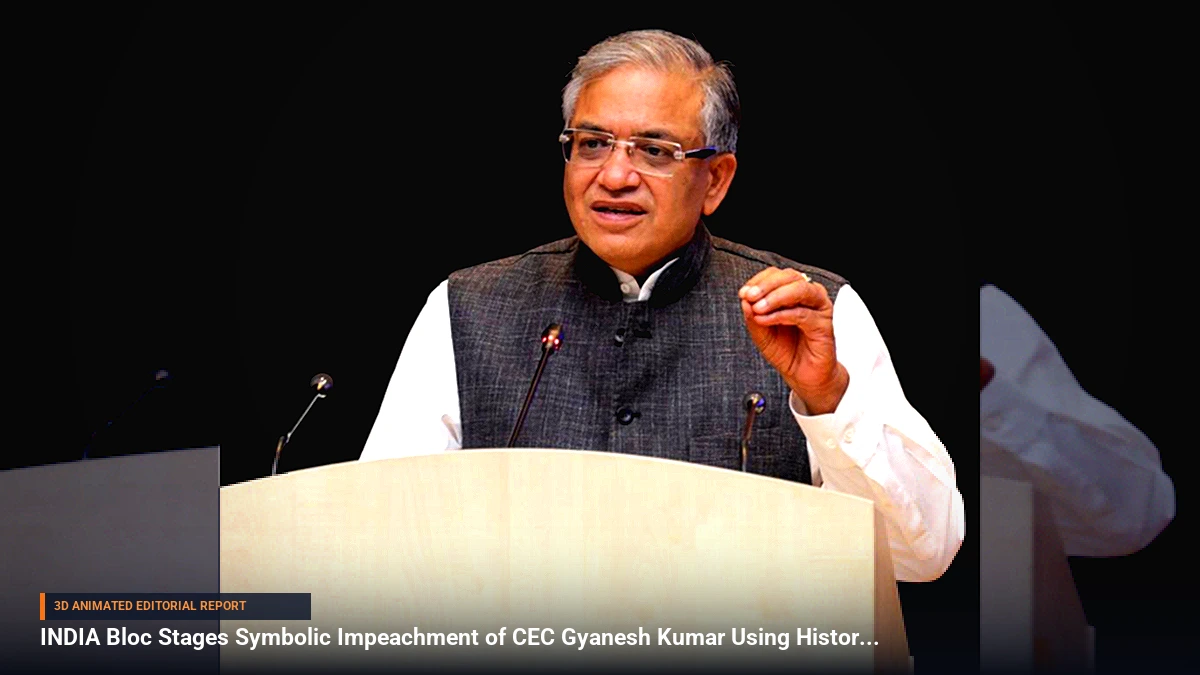
In a striking display of political theater and parliamentary critique, opposition parties belonging to the INDIA bloc convened a symbolic public impeachment event targeting Chief Election Commissioner (CEC) Gyanesh Kumar. Held on the lawn of senior Congress leader Mallikarjun Kharge, the gathering brought together roughly 250 opposition members of parliament to register their intense dissatisfaction with the election oversight body.
The centerpiece of the mock session was the return of former Lok Sabha Speaker Meira Kumar to the presiding chair. The 81-year-old leader, who served as the head of the lower house of parliament between 2009 and 2014, brought her trademark polite yet stern demeanor back to active proceedings. Organizers, including Congress media and publicity department head Pawan Khera, confirmed that the event was meticulously structured to mirror formal legislative processes, complete with a structured debate and a symbolic vote of censure.
Background & Key Context
Mock parliaments and symbolic legislative exercises have occasionally been deployed in political landscapes to signal systemic grievances when formal parliamentary avenues face deadlock or exclusion. By staging this event outside the traditional parliamentary precinct on private lawns, the opposition sought to bypass institutional constraints while retaining the visual gravity of a legislative session.
Adding historical resonance to the political messaging, Meira Kumar presided over the proceedings while seated on a historic artifact widely referred to as the 'Nehru Chair'. This deliberate integration of political symbolism harks back to early post-independence parliamentary traditions, drawing a sharp contrast between current governance practices and historical precedents as perceived by the opposition coalition.
Key Takeaways
- High-Level Participation: Around 250 opposition MPs participated in the symbolic public impeachment event.
- Experienced Leadership: Former Lok Sabha Speaker Meira Kumar presided over the mock parliamentary session.
- Historic Artifacts: The proceedings featured the use of the iconic 'Nehru Chair', amplifying the political symbolism.
- Venue and Organization: The event was hosted on Mallikarjun Kharge's lawn and coordinated by senior Congress leadership, including Pawan Khera.
- Core Target: The symbolic impeachment directly targeted Chief Election Commissioner Gyanesh Kumar over electoral grievances.
Impact, Analysis & Global/National Reactions
Political analysts view this unconventional move as an escalating effort by the opposition to take their grievances directly to the public sphere, utilizing familiar legislative imagery to crystallize public debate. While the mock impeachment holds no legal or constitutional weight over the Election Commission, it serves as a powerful psychological and media tool to unify fractured opposition ranks and keep pressure on independent constitutional authorities.
Critics from the ruling dispensation often dismiss such exercises as theatrics devoid of constitutional reality. However, supporters argue that these symbolic demonstrations are necessary safety valves for expressing deep-seated democratic concerns regarding the neutrality and functioning of electoral institutions.
What's Next: Looking Ahead
As the political fallout from the mock parliament reverberates through national discourse, attention turns to how institutional bodies and the ruling coalition will respond to the mounting pressure from opposition fronts. With upcoming electoral battles and ongoing legislative sessions on the horizon, the fault lines between the executive branch, oversight institutions, and opposition parties are expected to deepen, setting the stage for further parliamentary confrontations.

Be the first to comment
Start a useful conversation around this story.