
What Happened: The Core Developments
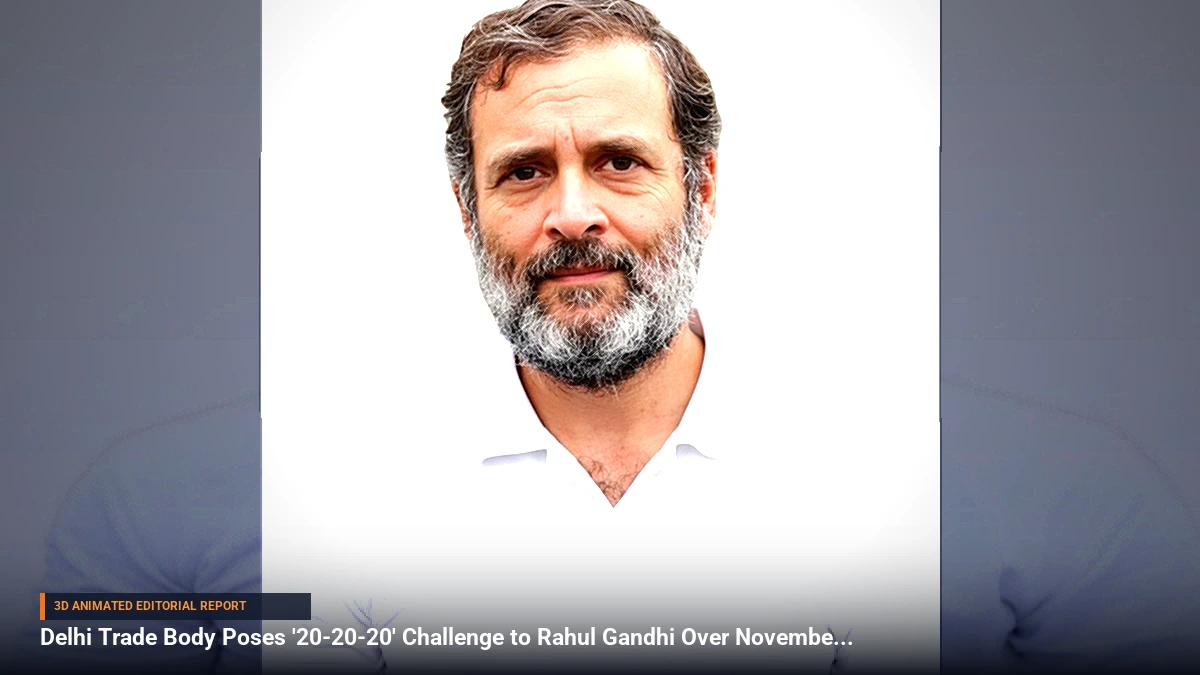
As political tensions mount in the national capital ahead of the high-profile opposition rallies, the local business community has stepped into the spotlight with a distinct set of conditional demands. The Chamber of Trade and Industry (CTI) in Delhi has formally approached senior Congress leader Rahul Gandhi with an innovative proposal termed the "20-20-20 challenge."
Under this proposal, the trade advocacy group has offered Gandhi a structured platform consisting of 20 markets, 20 select traders, and a strict 20-minute window to articulate how the major political mobilization scheduled for November 1 will positively impact local commerce and business operations. Trade representatives have emphasized that commercial activities in the capital frequently face disruptions due to large-scale demonstrations, street marches, and political gatherings, making economic justification a primary concern for local shopkeepers and business owners.
Crucially, the CTI has stated that it will withdraw its ongoing opposition to the November 1 rally if Rahul Gandhi successfully demonstrates tangible business benefits to the participating traders during this proposed interaction.
Background & Key Context
Political rallies in Delhi, particularly those organized at major public venues like Ramlila Maidan or through city-wide marches, have historically been flashpoints between political organizers and urban commercial bodies. Small and medium enterprises (SMEs) and independent retailers often bear the brunt of traffic restrictions, heightened security protocols, and logistical gridlocks that accompany mass political events.
In recent weeks, the political climate has intensified with opposition blocs planning high-stakes demonstrations—such as the 'Delhi Chalo' march and related rallies. As political entities ramp up mobilization efforts, trade associations are increasingly leveraging their collective bargaining power to demand accountability from political figures, shifting the dynamic from passive disruption tolerance to active economic negotiation.
Key Takeaways
- The '20-20-20' Offer: The Chamber of Trade and Industry offered Rahul Gandhi an engagement involving 20 markets, 20 traders, and 20 minutes.
- Conditional Opposition: The trade body promised to retract its resistance to the November 1 rally if business benefits are convincingly established.
- Economic Concerns: Local traders remain anxious about commercial disruptions, lost footfall, and logistical gridlock caused by major political processions.
- Shifting Political Dynamics: Trade associations are increasingly utilizing conditional support as leverage to question mainstream political actors on economic impacts.
- High-Stakes Timing: The ultimatum comes right ahead of a packed weekend of political protests, counter-rallies, and demonstrations across Delhi.
Impact, Analysis & Global/National Reactions
This unconventional offer highlights a growing trend where grassroots economic stakeholders refuse to serve as silent bystanders to political maneuvers. Analysts note that by attaching economic performance indicators to political permissions, trade bodies are effectively introducing corporate-style accountability to political organizing.
While opposition strategists view mass rallies as vital tools for democratic mobilization and public outreach, local merchant associations argue that the immediate financial toll on daily wage earners, retail shopkeepers, and supply chain operators cannot be overlooked. The CTI's stance underscores the delicate balancing act political parties must perform: maintaining grassroots momentum while mitigating the economic anxieties of urban business communities.
What's Next: Looking Ahead
All eyes remain on the Congress leadership to see whether Rahul Gandhi or party representatives will accept the CTI's invitation ahead of the fast-approaching November 1 deadline. Concurrently, local authorities and Delhi Police are reviewing the route permissions, crowd management caps, and security guidelines for the mega-rally, balancing constitutional rights of assembly against commercial continuity in the capital.


Be the first to comment
Start a useful conversation around this story.