
What Happened: The Core Developments
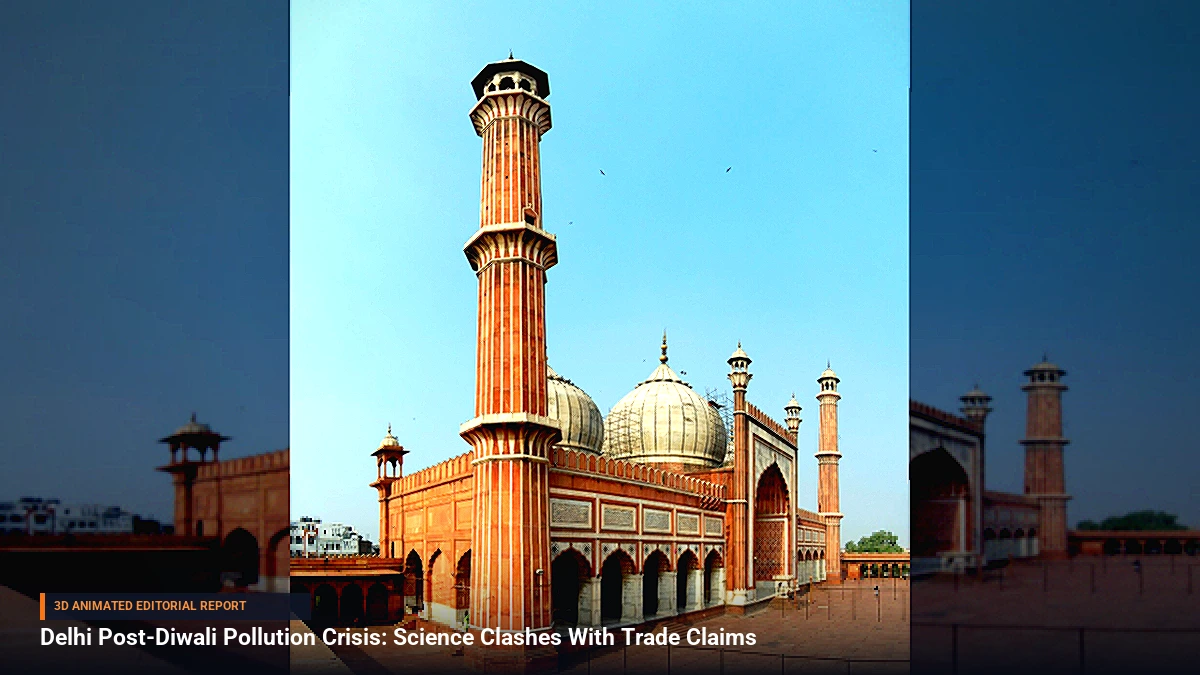
The aftermath of Diwali in India's national capital has once again plunged millions into a severe public health and logistical crisis. A landmark scientific study conducted by the Indian Institute of Tropical Meteorology (IITM) revealed that firecracker emissions were responsible for a staggering 80% of post-Diwali pollution across Delhi. This sudden surge in toxic particulate matter created an impenetrable, hazardous blanket of smog that paralyzed normal life.
The environmental crisis immediately manifested in critical infrastructure breakdowns. Delhi's Indira Gandhi International Airport experienced immense disruptions, recording a 44% delay in flight departures. The deteriorating atmospheric conditions forced aviation authorities to activate the season's first Low Visibility Procedure (LVP), leaving thousands of travelers stranded and highlighting how seasonal air quality failures directly jeopardize national transit networks.
Background & Key Context
Delhi's annual winter battle with hazardous air quality is a well-documented multi-factorial phenomenon, yet the specific triggers remain a subject of intense socio-political and scientific debate. Every year, as temperatures drop and wind speeds slow down, pollutants become trapped in the lower atmosphere.
Historically, policymakers and environmentalists have focused heavily on regulating festive activities, particularly the bursting of firecrackers during Diwali, alongside managing agricultural crop residue burning in neighboring northwestern states. However, preceding this year's festival, independent environmental assessments noted that Delhi-NCR's pre-Diwali PM2.5 levels had already touched alarming three-year highs, creating a volatile baseline before a single festive cracker was lit.
Key Takeaways
- Scientific Attribution: Research by IITM attributes 80% of post-Diwali particulate pollution directly to firecracker combustion.
- Infrastructure Disruption: Toxic haze caused a 44% delay in flight departures, triggering the airport's first Low Visibility Procedure (LVP) of the winter season.
- Trade Pushback: The Chamber of Trade Industry (CTI) strongly contests the findings, claiming firecrackers are being scapegoated.
- Baseline Pressures: Critics and trade representatives point to dangerously high pre-Diwali air quality indices (AQI) and ongoing stubble burning as the true systemic culprits.
- Health & Economic Toll: The prolonged toxic smog severely impacts public health systems and commercial operations across the National Capital Region.
Impact, Analysis & Global/National Reactions
The release of the IITM findings has ignited a fierce blame game between scientific bodies, regulatory authorities, and commercial stakeholders. While environmental scientists emphasize the immediate, acute spike caused by pyrotechnics, commercial organizations have pushed back aggressively.
The Chamber of Trade Industry (CTI) argued that firecrackers are being unfairly blamed for Delhi's chronic environmental decay. CTI representatives noted that the air quality index was already deeply compromised prior to the festival, arguing that systemic failures—such as inadequate enforcement against agricultural stubble burning and unmanaged dust—deserve the primary blame rather than seasonal festive traditions.
Public health experts, meanwhile, warn that focusing solely on the political debate obscures the severe health risks posed by fine particulate matter ($PM_{2.5}$) penetrating deep into human respiratory and cardiovascular systems.
What's Next: Looking Ahead
As Delhi transitions further into the winter season, local authorities face mounting pressure to implement more effective, long-term interventions rather than relying on reactive bans. Stakeholders are eagerly awaiting comprehensive policy reviews from environmental tribunals and municipal bodies to determine whether enforcement strategies will pivot toward addressing underlying regional stubble burning or maintaining strict prohibitions on festive emissions. Without a cohesive strategy bridging scientific data and economic realities, Delhi's annual winter crisis will undoubtedly persist.


Be the first to comment
Start a useful conversation around this story.