
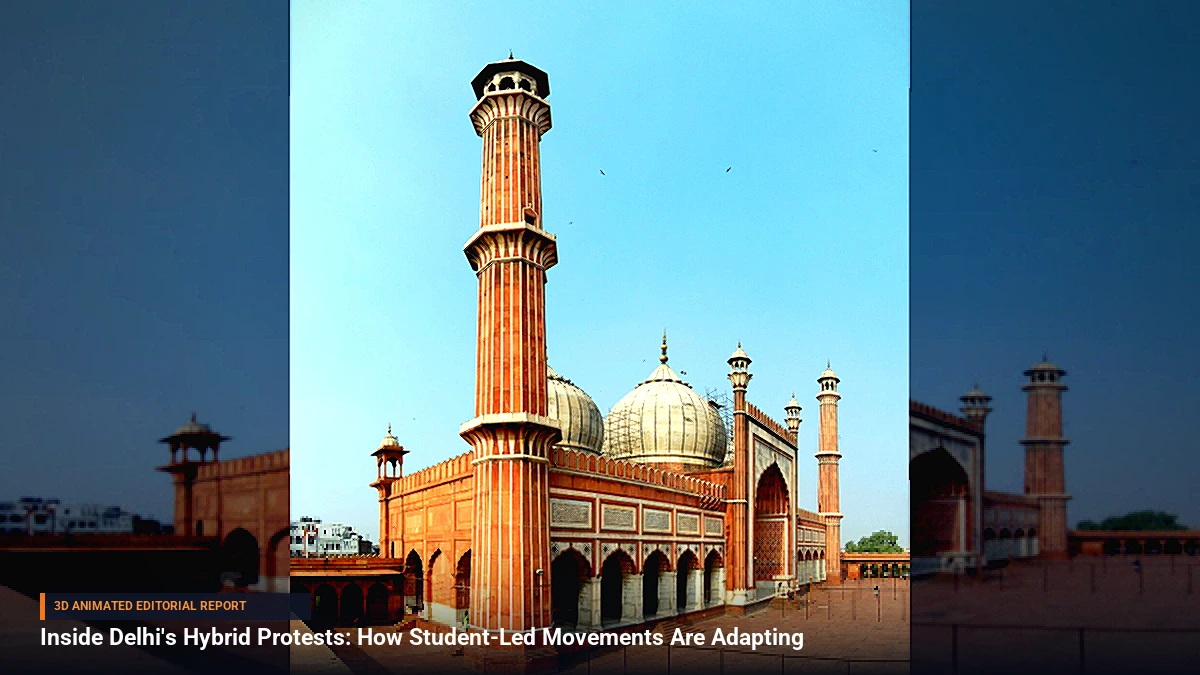
What Happened: The Core Developments
Recent demonstrations in New Delhi have showcased a profound tactical pivot in civil disobedience across the capital. Following intensive police containment and mass detentions at traditional gathering hubs, student-led movements have successfully transitioned into decentralized operations. The Jantar Mantar 2.0 protests, initially envisioned as a unified, centralized mass rally addressing allegations of electoral fraud and specific demands involving public officials such as Gyanesh Kumar, faced immediate state countermeasures.
Rather than dissolving under pressure, protesters adapted by dispersing into highly mobile pockets across the city. Central to this new wave of activism is AISA leader Neha Bora, whose ability to evade initial police detention and maintain an elusive public profile has turned her into a symbolic motif for the shifting dynamics of urban resistance. While the main avenue at Jantar Mantar remained heavily barricaded and off-limits, demonstrators successfully circumvented blockades to voice their grievances in strategic, unexpected locations throughout the capital.
Background & Key Context
For decades, New Delhi's Jantar Mantar has served as the symbolic epicenter for political dissent, labor strikes, and social campaigns in India. However, tightening security apparatuses and proactive preventive detentions by law enforcement have increasingly forced activist groups to rethink traditional assembly blueprints. The emergence of "hybrid protests" represents a direct evolution from static sit-ins to fluid, fast-moving demonstrations that leverage digital communication and decentralized leadership structures.
Student organizations like the All India Students Association (AISA) have historically operated at the forefront of campus and national politics. The latest mobilization builds upon a growing wave of youth-led discontent regarding institutional transparency, electoral integrity, and administrative accountability. Thecat-and-mouse dynamics witnessed on the streets of Delhi mirror global trends in modern protest movements, where digital coordination enables rapid assembly and dispersal before law enforcement can establish complete perimeter control.
Key Takeaways
- Tactical Evolution: Protests have shifted from centralized mass rallies at traditional sites like Jantar Mantar to decentralized, highly mobile pockets across New Delhi.
- Symbolic Leadership: AISA leader Neha Bora has emerged as a prominent figure, capturing public attention after eluding police custody and embodying the resilient nature of the movement.
- Core Grievances: Demonstrators continue to voice strong concerns regarding alleged electoral fraud and specific institutional demands directed at authorities.
- State Containment: Heavy police presence and proactive detentions have forced activist networks to abandon static sit-in models in favor of agile, hard-to-predict operational frameworks.
Impact, Analysis & Global/National Reactions
The transformation of Delhi's protest landscape has sparked intense debate among political analysts, security experts, and civil rights advocates regarding the future of public assembly in democratic capitals. Critics of heavy-handed policing argue that restrictive measures and mass detentions infringe upon fundamental rights to peaceful assembly, driving dissent underground or into chaotic street confrontations. Conversely, authorities maintain that stringent security protocols are vital for maintaining public order and preventing major disruptions in critical urban zones.
Political commentators note that the adaptability of student leaders demonstrates a generational shift in grassroots organizing. By refusing to rely on a single physical location, groups like AISA have made traditional containment strategies increasingly ineffective. "When rigid barriers are met with fluid strategy, the nature of civic engagement fundamentally alters," notes one political observer tracking the New Delhi demonstrations. This decentralized model challenges governance structures to engage with fluid coalitions rather than fixed institutional representatives.
What's Next: Looking Ahead
As the standoff between student activists and law enforcement persists, all eyes remain on how both sides will adapt their long-term strategies. For civil rights groups, the focus shifts toward legal challenges surrounding preventive detentions and the right to peaceful protest in public spaces. Meanwhile, student organizations are expected to continue utilizing mobile, flash-mob-style demonstrations to keep pressure on authorities regarding electoral transparency and administrative demands.
Law enforcement agencies are simultaneously recalibrating intelligence and rapid-response capabilities to manage decentralized urban unrest without escalating public friction. Whether these hybrid tactics will force structural concessions from the government or lead to even tighter regulatory frameworks remains one of the most critical political questions facing India's capital.
Additional reporting by the RumourNews Desk.


Be the first to comment
Start a useful conversation around this story.