
What Happened: The Core Developments
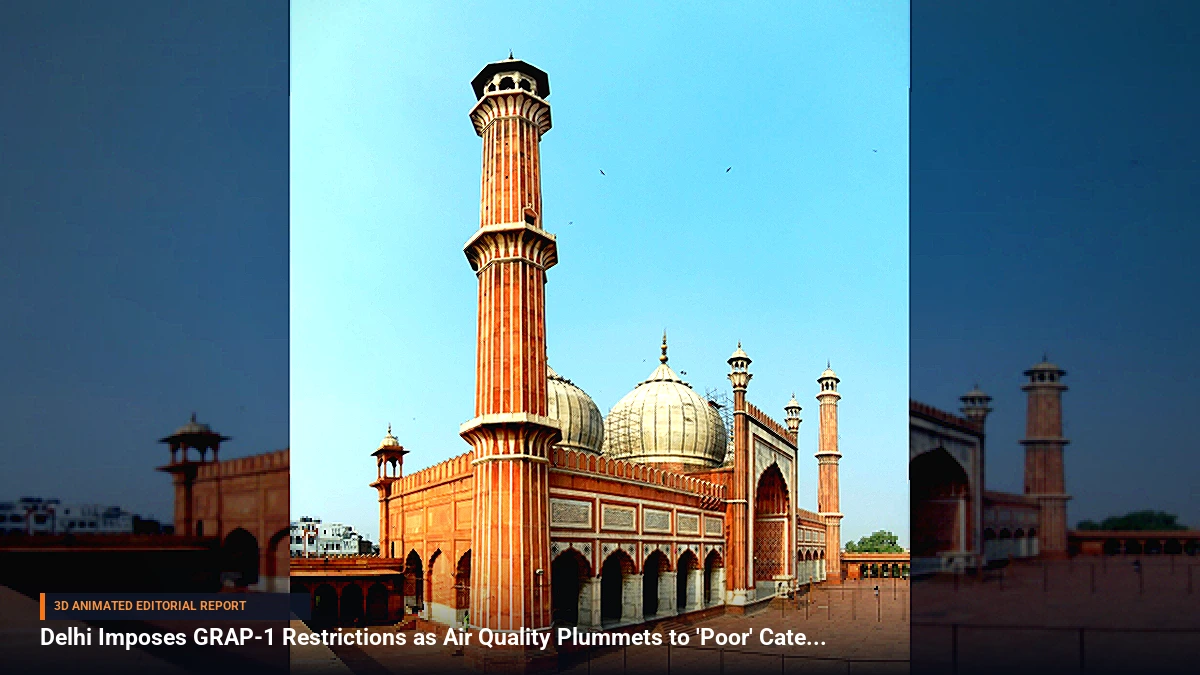
The National Capital Region (NCR) of Delhi has officially stepped into a heightened state of environmental alertness following a sharp and alarming deterioration in atmospheric conditions. Authorities across the region have imposed the Graded Response Action Plan Stage 1 (GRAP-1) restrictions after the city's overall Air Quality Index (AQI) slipped squarely into the 'poor' category.
The crisis unfolded with startling speed. Delhi's AQI leaped from a moderate 179 to a concerning 244 in a single 24-hour cycle, hitting the 244 threshold by early afternoon. This sudden surge prompted the Commission for Air Quality Management (CAQM) to formally issue urgent directives enforcing a series of sweeping preventive and regulatory measures designed to curb localized pollution sources.
Under the newly activated GRAP-1 framework, a multitude of restrictions immediately take effect. These include stringent controls on construction and demolition activities to minimize airborne particulate matter, stricter compliance mandates for vehicular emissions, and a mandated doubling of parking charges across municipal zones to discourage private vehicle usage and encourage public transit adoption.
Background & Key Context
To understand the gravity of the current enforcement, one must look closely at the seasonal dynamics that plague Northern India. Delhi-NCR routinely experiences severe air quality degradation during the transition phases of the year, driven by a combination of unfavorable meteorological conditions, falling temperatures, localized vehicular exhaust, dust, and regional stubble burning.
The CAQM formulated the Graded Response Action Plan as a structured, incremental emergency response mechanism divided into distinct stages—ranging from Stage 1 ('poor' air quality) to Stage 4 ('severe plus'). Each stage introduces increasingly aggressive interventions to prevent the AQI from spiraling into hazardous territory. However, the rapidity with which the index jumped from 179 to 244 illustrates just how fragile the regional airshed remains, leaving little breathing room for administrative turnaround.
Key Takeaways
- Rapid AQI Deterioration: Delhi's Air Quality Index surged from 179 to 244 within a single day, crossing into the 'poor' threshold.
- Immediate Intervention: The Commission for Air Quality Management (CAQM) formally triggered GRAP-1 restrictions across the National Capital Region.
- Targeted Restrictions: New rules include limited construction and demolition activity, tighter automobile emission monitoring, and doubled public parking fees.
- Emergency Framework: GRAP functions as a phased regulatory safety net designed to halt escalating pollution before it reaches catastrophic levels.
- Persistent Vulnerability: The sudden spike highlights the ongoing difficulty of maintaining stable air quality in the densely populated capital basin.
Impact, Analysis & Global/National Reactions
The activation of GRAP-1 sends an immediate ripple effect through local commerce, transport networks, and daily civilian life. Urban planners and environmental analysts point out that while these emergency measures are vital for choking off immediate pollutant spikes, they fundamentally remain reactive bandaids rather than structural cures.
Public policy experts argue that relying heavily on seasonal curbs fails to address the root causes of urban pollution, which include rapid vehicular population growth, industrial emissions, and inadequate waste management infrastructure. Environmental advocates emphasize that sustained preventive action—such as electrifying public transit fleets, aggressively expanding green cover, and enforcing year-round industrial compliance—is indispensable. Without structural reforms, Delhi-NCR risks remaining locked in an endless cycle of seasonal emergency declarations.
What's Next: Looking Ahead
As the region adapts to GRAP-1 protocols, environmental monitoring agencies remain on high alert. Should meteorological conditions fail to improve or if pollutant concentrations continue to rise, authorities may be forced to escalate restrictions to GRAP Stage 2 or higher, which would bring even stricter bans on diesel generators, coal usage, and additional vehicular classifications.
Stakeholders, including municipal corporations, traffic police, and construction operators, face intense scrutiny regarding ground-level enforcement. The coming weeks will test the administrative apparatus's ability to seamlessly execute these emergency directives while keeping public disruption to a minimum.


Be the first to comment
Start a useful conversation around this story.