
What Happened: The Core Developments
The national capital has entered a heightened state of security and civic regulation as overlapping festive celebrations reach their peak. Prime Minister Narendra Modi's anticipated presence at major Delhi Dussehra events triggered an unprecedented three-layer security deployment, involving thousands of armed personnel, tactical command points, and rigorous perimeter checks designed to secure high-density public zones.
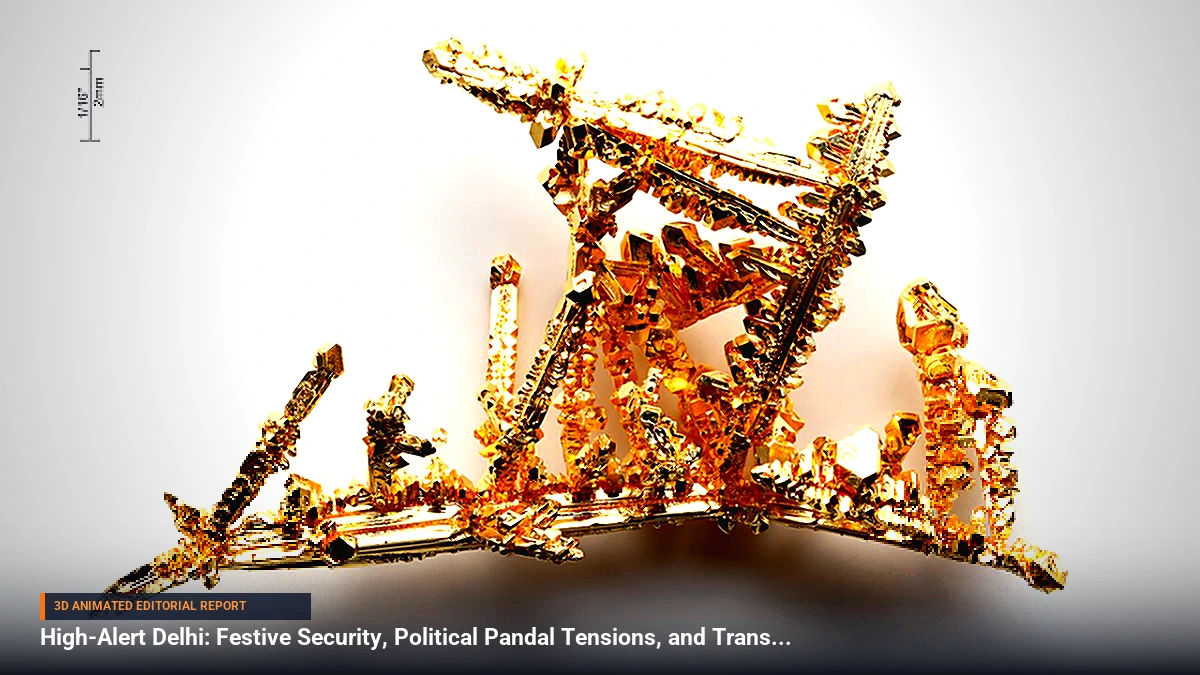
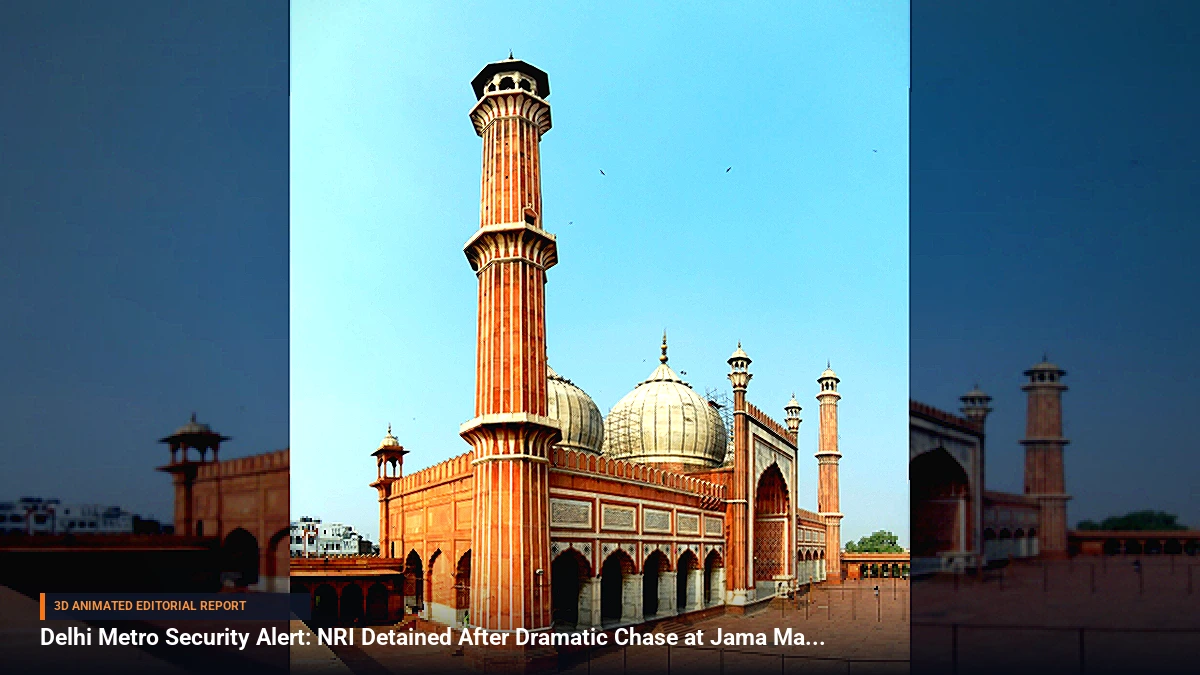
Simultaneously, law enforcement and transit security have been tested on multiple fronts. At the Jama Masjid metro station, a routine security screening transformed into a high-octane pursuit when a non-resident Indian (NRI) attempted to bolt past security checks. Captured on CCTV, a Central Industrial Security Force (CISF) jawan chased the fleeing suspect down escalator stairs, successfully apprehending him. Upon physical inspection, authorities discovered approximately 155 grams of gold powder ingeniously concealed within his undergarments.
Away from transit hubs, community festivities have faced sudden administrative friction. Organizers at south Delhi’s C.R. Park—a prominent cultural hub for Durga Puja celebrations—found themselves at loggerheads with local authorities. Pandals faced stringent restrictions, including enforced sound curfews capping celebrations at 10 p.m. or 11 p.m., alongside direct police intervention to shut down public address systems and speakers.
Background & Key Context
The juxtaposition of heavy VIP security and micro-level cultural management illustrates the complex logistical hurdles faced by Delhi authorities during the autumn festive cycle. Dussehra and Durga Puja traditionally draw millions of residents into public spaces, transforming neighborhood parks, transit networks, and temples into bustling epicenters.
In recent years, the intersection of political oversight, urban noise pollution regulations, and heightened intelligence alerts has drastically altered how public gatherings are managed. High-profile national figures attending iconic Ramlila and Dussehra grounds necessitate sterile zones, sniper deployment, and strict traffic diversions. Meanwhile, urban residential hubs like C.R. Park operate under strict municipal guidelines regarding decibel limits and public gathering hours, creating regular friction points between local community organizers, civic bodies, and law enforcement agencies.
Key Takeaways
- Multi-Tiered Protection: A robust three-layer security grid was activated across Delhi for Prime Minister Narendra Modi’s Dussehra engagements.
- Transit Vigilance: Quick-thinking CISF personnel successfully intercepted an NRI attempting to smuggle 155 grams of hidden gold powder at the Jama Masjid metro station.
- Festive Curtailment: Durga Puja organizers in C.R. Park encountered strict administrative interventions, forcing the early shutdown of speakers and events under evening deadlines.
- Political Flashpoints: Opposition figures and local organizers raised concerns over heavy-handed police tactics during community cultural celebrations.
- Comprehensive Surveillance: Modern urban infrastructure, including extensive CCTV networks, played a critical role in tracking and neutralizing transit security threats.
Impact, Analysis & Global/National Reactions
The simultaneous management of VIP security apparatuses and local cultural events underscores the immense pressure resting on Delhi’s security architecture. Security analysts note that metropolitan hubs during festive seasons face a dual mandate: safeguarding national leadership against potential asymmetrical threats while ensuring everyday citizens can participate in cultural traditions without feeling over-policed.
The friction at C.R. Park drew immediate political commentary. Local politicians and community advocates voiced sharp criticisms over police measures, accusing authorities of heavy-handedness and unnecessary harassment of the Bengali community during their premier cultural festival. Opposition leaders questioned the rationale behind pulling the plug on cultural events late into the night, framing it as an overreach of civic authority.
Conversely, the swift takedown at the Jama Masjid metro station drew widespread praise for the CISF. Security experts highlighted the incident as a testament to the efficacy of frontline transit personnel, proving that routine baggage and body screenings remain vital frontline defenses against underground financial crimes and localized smuggling rings.
What's Next: Looking Ahead
As the festive season winds down, municipal authorities and law enforcement agencies are expected to conduct post-event security reviews. The growing friction between community organizers and noise-regulation enforcers in areas like C.R. Park points to an urgent need for clearer, pre-event coordination frameworks ahead of future cultural calendars.
Meanwhile, the arrested NRI and the seized gold powder have been handed over to specialized customs and economic offenses units for thorough interrogation. Investigators are currently probing whether the Jama Masjid incident points to a broader, organized hawala or gold-smuggling syndicate utilizing the Delhi Metro network to bypass traditional airport and highway checkpoints.


Be the first to comment
Start a useful conversation around this story.