
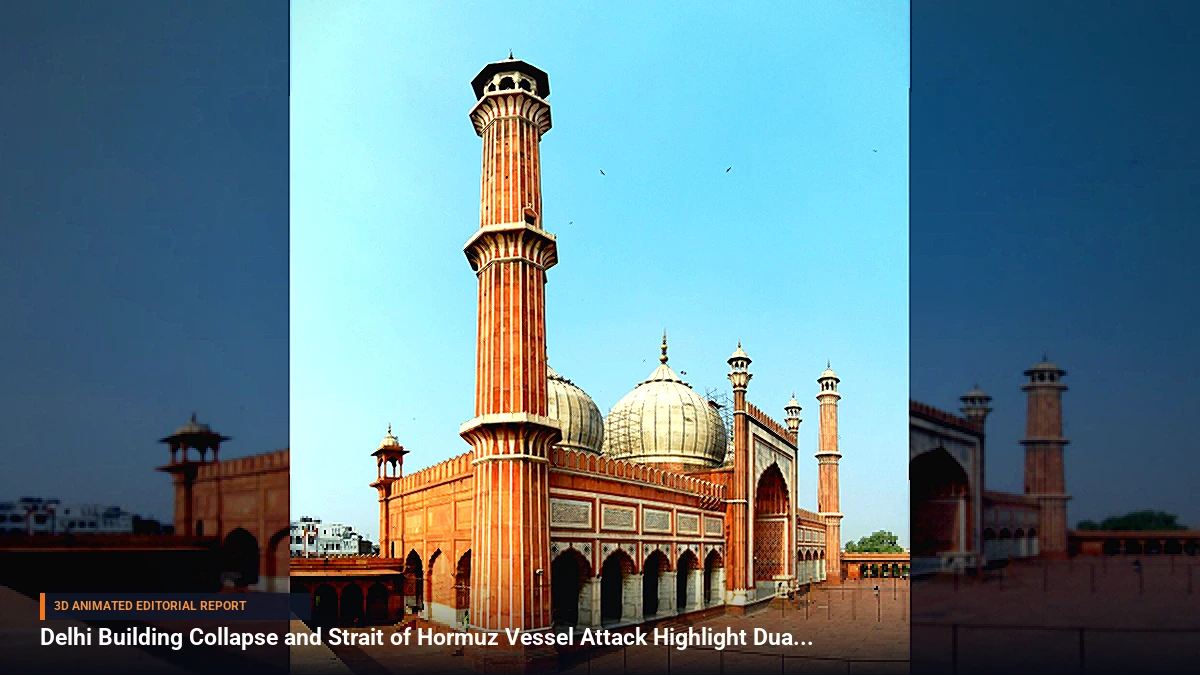
What Happened: The Core Developments
Recent days have brought intense scrutiny to both domestic structural integrity and international maritime security as India confronts concurrent crises. In the national capital, a major residential disaster unfolded when a five-storey building collapsed in New Seemapuri. The Delhi Fire Service received an urgent distress call regarding the cave-in at 3:30 PM, prompting an immediate deployment of emergency response units, fire engines, and rescue personnel to the site.
While rescue operations worked through the rubble, conflicting casualty reports emerged from local authorities and news networks. Initial reporting highlighted a varying toll, with some outlets confirming fatalities including two children and a pregnant woman, alongside multiple individuals sustaining critical injuries. Families rushed to the scene to search for missing loved ones as emergency responders raced against time to clear concrete debris.
Simultaneously, on the geopolitical front, India's Ministry of External Affairs issued a stern condemnation following an aggressive assault on a Panama-flagged vessel operating near the Oman coast and the strategic Strait of Hormuz. The violent incident resulted in injuries to 11 Indian crew members, underscoring the escalating dangers faced by Indian seafarers navigating volatile international shipping lanes.
Background & Key Context
The domestic tragedy in New Seemapuri follows closely on the heels of similar urban safety failures, notably the Satya Niketan disaster just a month prior. Rapid urbanization, lax enforcement of building codes, unauthorized structural additions, and aging infrastructure have long plagued densely populated residential zones across major Indian metropolitan areas. Municipal authorities have repeatedly faced criticism for failing to preemptively identify vulnerable properties.
On the international side, the maritime attack near the Strait of Hormuz highlights growing vulnerabilities for commercial shipping in the Middle East. With key oil and gas transit routes facing heightened geopolitical friction, Indian nationals serving as crew members on international cargo fleets find themselves increasingly caught in the crossfire of regional conflicts.
Key Takeaways
- Delhi Tragedy: A five-storey residential building collapsed in New Seemapuri, triggering emergency rescue operations.
- Emergency Response: The Delhi Fire Service responded swiftly after receiving an emergency alert at 3:30 PM.
- Casualties: Multiple injuries and fatalities, including young children and a pregnant woman, were reported amid conflicting initial counts.
- Maritime Incident: Eleven Indian citizens sustained injuries during an attack on a Panama-flagged commercial vessel near the Oman coast.
- Diplomatic Condemnation: India's Ministry of External Affairs formally condemned the Strait of Hormuz strike, emphasizing the protection of global seafarers.
Impact, Analysis & Global/National Reactions
The dual occurrences have sparked widespread public concern regarding the safety of vulnerable populations both at home and abroad. Urban planners have reiterated calls for stricter accountability in building construction and mandatory structural audits for multi-storey tenements in congested localities.
Meanwhile, maritime security experts have expressed deep alarm over the safety of Indian merchant navy personnel. Institutional responses from New Delhi underscore a zero-tolerance stance toward threats against civilian seafarers, with the Ministry of External Affairs demanding immediate accountability and enhanced safety measures along critical international trade corridors.
What's Next: Looking Ahead
Investigations into the exact root cause of the New Seemapuri building collapse are currently underway, with municipal authorities facing mounting pressure to penalize negligence and illegal construction practices. In the international arena, diplomatic channels are actively engaging with regional stakeholders to secure better protections for maritime crews operating near the Strait of Hormuz as global shipping lines reassess risk profiles.



Be the first to comment
Start a useful conversation around this story.