
What Happened: The Core Developments
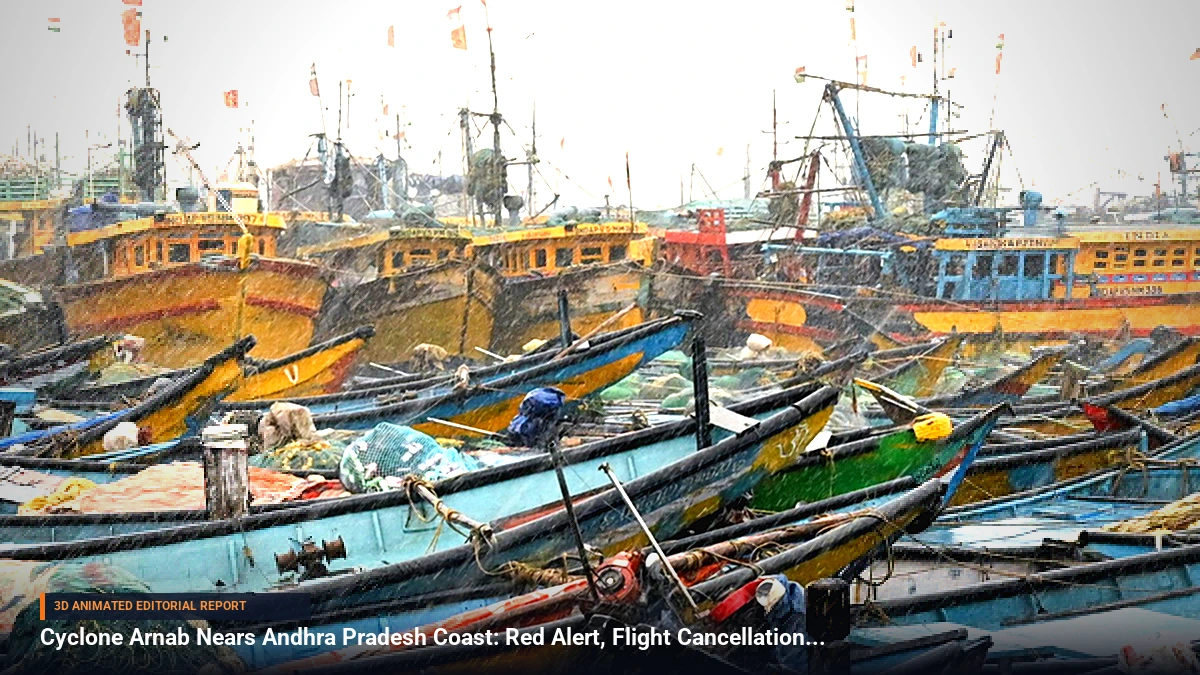
The eastern coast of India is facing compounding strains as Very Severe Cyclonic Storm 'Arnab' made a powerful landfall near Narsapur, battered by intense winds and unrelenting downpours. The India Meteorological Department (IMD) tracked the system as it crossed the coastal regions between Bapatla and Visakhapatnam, severely disrupting daily life across Andhra Pradesh and neighboring Odisha.
In response to the extreme weather conditions, the Ministry of Civil Aviation acted swiftly, ordering the suspension of flight operations at three key airports in Andhra Pradesh. Major commercial carriers have canceled multiple services, leaving passengers stranded while authorities issue comprehensive advisories regarding rebooking and refund protocols.
Background & Key Context
The dual pressure of severe weather and administrative friction highlights the vulnerability of the eastern seaboard. While disaster management teams have been working round the clock to mitigate cyclone impacts, structural friction between Andhra Pradesh and Odisha has simultaneously escalated into the legal sphere.
Notably, Odisha recently approached the Supreme Court to challenge a contentious poll plan initiated by Andhra Pradesh authorities within a disputed border territory. This inter-state jurisdictional dispute over electoral rights in overlapping regions adds a layer of governance complexity precisely as both state administrations are forced to coordinate emergency relief efforts.
Key Takeaways
- Landfall Location: Cyclone Arnab made landfall near Narsapur, crossing the coast between Bapatla and Visakhapatnam.
- Regional Impact: Heavy rainfall and high-velocity winds have heavily impacted coastal districts in both Andhra Pradesh and Odisha.
- Aviation Disruptions: Flight operations at three prominent Andhra Pradesh airports were temporarily suspended, accompanied by widespread airline service cancellations.
- Legal Escalation: Odisha filed a petition in the Supreme Court concerning Andhra Pradesh's local election plans in a disputed border zone.
- Emergency Response: Disaster response forces remain deployed across vulnerable sectors to clear debris and manage flood risks.
Impact, Analysis & Global/National Reactions
The simultaneous unfolding of a high-intensity natural disaster and an inter-state legal dispute underscores the multifaceted challenges facing regional governance in India. Emergency response units have focused heavily on evacuation and infrastructure safety, particularly in metropolitan areas like Visakhapatnam that bore the brunt of the storm's initial fury.
Transport and logistics sectors have absorbed immediate shocks due to the aviation shutdowns. Civil aviation watchdogs have mandated strict adherence to passenger compensation and communication standards, forcing airlines to navigate logistical hurdles while minimizing commuter distress.
What's Next: Looking Ahead
As the immediate threat of Cyclone Arnab gradually downgrades into a deep depression, relief and rehabilitation efforts will dominate the agenda for local administrations. Authorities must prioritize clearing blocked transit routes, restoring power grids, and preventing post-cyclone waterborne health hazards.
Concurrently, legal analysts will closely monitor the Supreme Court proceedings regarding the Odisha-Andhra Pradesh border dispute. The impending judicial hearings could establish vital precedents for how inter-state administrative and electoral boundaries are managed during civic crises.




Be the first to comment
Start a useful conversation around this story.