
What Happened: The Core Developments
Recent financial sessions have painted a volatile picture across Asian equity markets, characterized by stark regional divergences and pressing geopolitical warnings. In India, equity benchmarks Sensex and Nifty staged a notable recovery, successfully halting a persistent three-day losing streak. The rebound was primarily anchored by renewed investor appetite and aggressive buying in information technology sector shares.
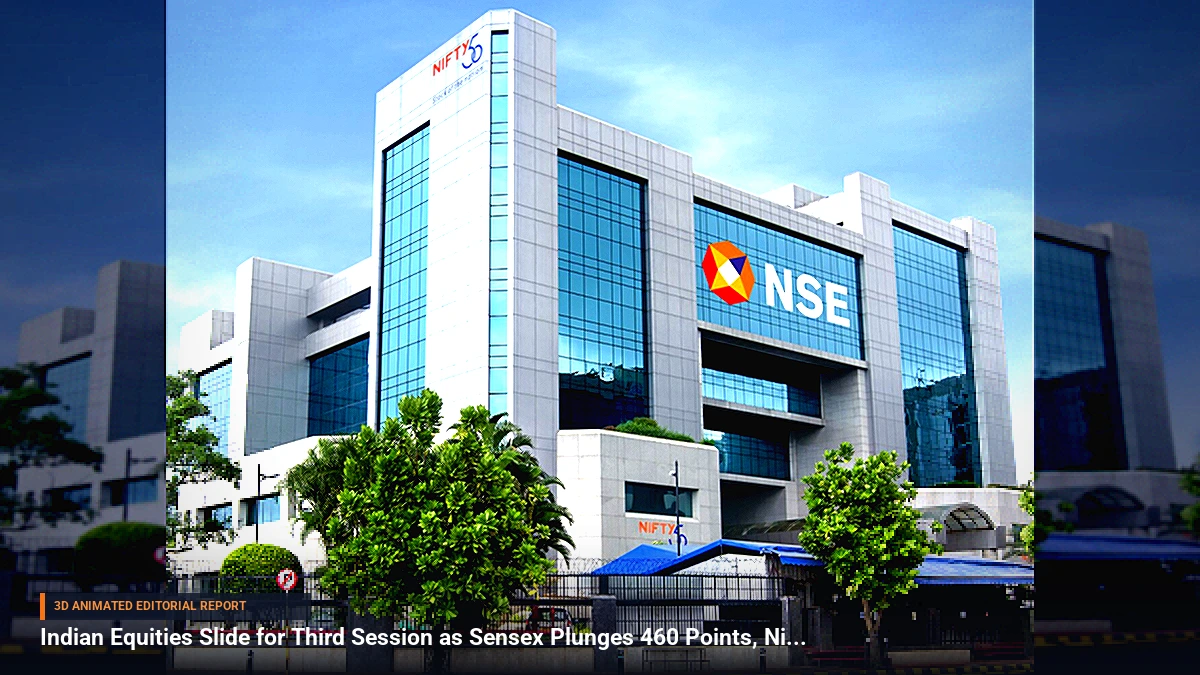
Market metrics showed the BSE Sensex climbing 343 points to settle at 73,592, while the broader NSE Nifty advanced 41 points to close at 22,729. However, this localized Indian market resilience stood in stark contrast to broader regional trends elsewhere in Asia, most notably in China, where equity values experienced a severe downward spiral.
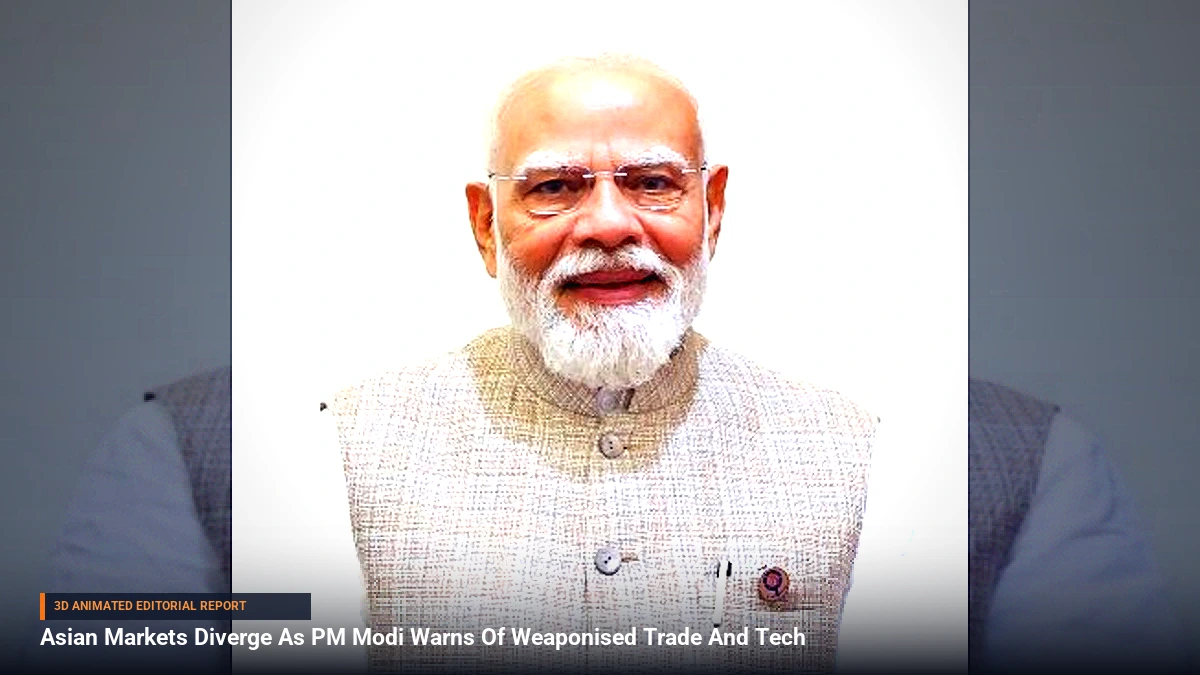
Simultaneously, the geopolitical landscape took center stage at the high-profile NDTV World Summit 2026. Delivering the keynote address, Prime Minister Narendra Modi addressed international delegates and industry leaders, drawing critical attention to the shifting paradigms of global commerce and security.
Background & Key Context
The simultaneous fluctuations in regional exchanges reflect an increasingly fragile global economic ecosystem. For weeks, analysts have monitored mounting pressures across Asian financial corridors. China's stock market, in particular, has suffered a massive contraction, tumbling into bear market territory as enthusiasm surrounding artificial intelligence (AI) trades waned and initial optimism regarding domestic policy stimulus faded. The benchmark CSI 300 index extended its brutal 10-week rout, underscoring structural anxieties among foreign and domestic investors alike.
Against this backdrop of macro-financial instability, Prime Minister Modi’s remarks at the summit highlighted deep-seated anxieties over international interdependence. His address underscored how historical frameworks of globalization are currently being tested by protectionist policies and strategic geopolitical rivalries.
Key Takeaways
- Indian Market Rebound: Sensex gained 343 points to reach 73,592, and Nifty rose 41 points to 22,729, snapping a three-day bearish run.
- IT Sector Catalyst: Renewed buying interest in major Indian IT stocks served as the primary engine for the domestic market recovery.
- China Bear Market: China's equity markets officially slipped into bear territory, with the CSI 300 deepening a prolonged 10-week downward trend.
- Fading Stimulus Hopes: The downturn in Chinese equities was exacerbated by evaporating policy stimulus expectations and slowing momentum in the AI trade sector.
- Geopolitical Warnings: Speaking at the NDTV World Summit 2026, PM Modi warned that essential drivers of global interaction are increasingly being weaponised.
Impact, Analysis & Global/National Reactions
The dichotomy between India's market resilience and China's deep correction highlights a broader re-allocation of investor capital across emerging markets. Financial analysts note that portfolio managers are increasingly decoupling regional assessments, favoring markets with robust domestic consumption and stable regulatory frameworks over those dependent on sweeping, unrealized state stimulus.
On the geopolitical front, Prime Minister Modi’s assertion that trade, technology, and sea routes are being weaponised today struck a chord with international policy analysts. Economic strategists point out that supply chain weaponisation—ranging from semiconductor export controls to maritime chokepoint tensions—poses an existential risk to post-pandemic economic recovery. Institutional responses emphasize the urgent need for multilateral cooperation to safeguard open shipping lanes and technological transparency.
What's Next: Looking Ahead
As markets digest these macroeconomic and geopolitical signals, investors will closely monitor upcoming central bank policy decisions and corporate earnings reports. In India, sustained performance in the technology sector will be crucial to maintaining recent market gains. Meanwhile, international observers will watch closely to see if Beijing introduces aggressive fiscal measures to reverse the CSI 300 slide, or if the region faces prolonged capital flight amid persistent structural headwinds.




Be the first to comment
Start a useful conversation around this story.