
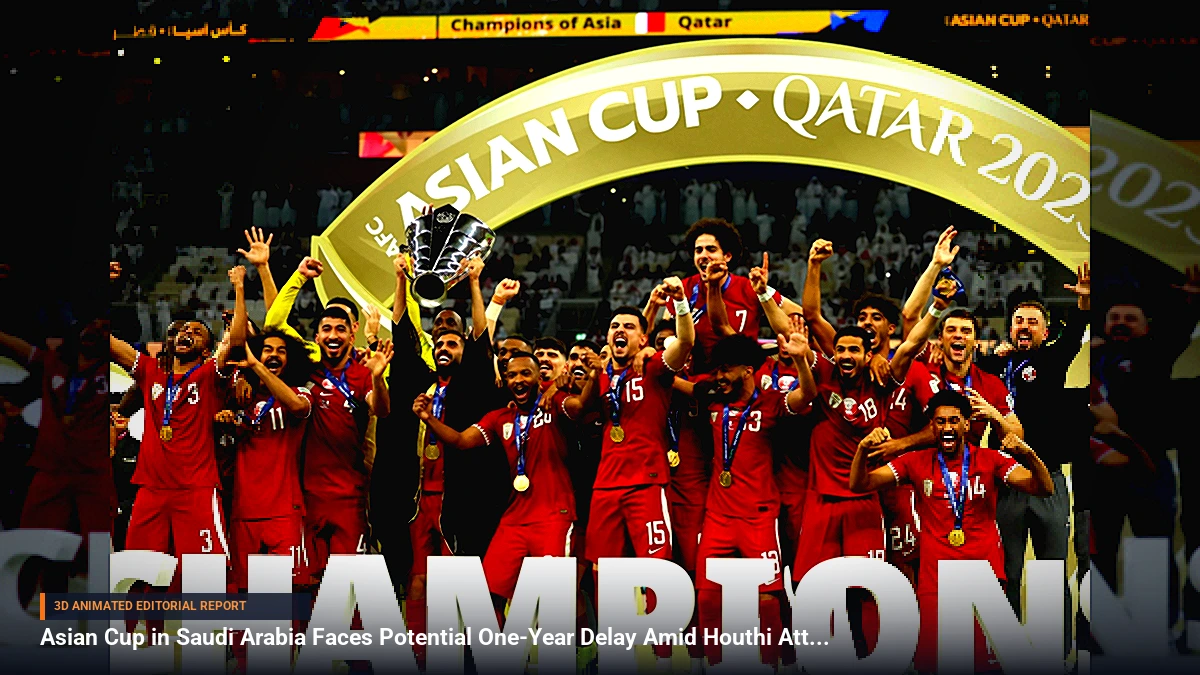
What Happened: The Core Developments
The landscape of international sports is once again intersecting with complex geopolitical realities as the Asian Football Confederation (AFC) addresses escalating security challenges in the Middle East. The leadership of the AFC has publicly stated that the prestigious Asian Cup, originally scheduled to kick off in Saudi Arabia on January 7, could be postponed by an entire year if ongoing security risks persist.
The potential delay stems directly from a surge in regional tensions, highlighted by renewed Houthi attacks targeting infrastructure and strategic locations in Saudi Arabia. These security developments have forced sports administrators to re-evaluate the logistical feasibility and safety parameters of hosting a massive continental tournament that draws hundreds of thousands of international visitors, athletes, and media personnel.
While the tournament remains officially on schedule for now, the acknowledgment from the AFC leadership underscores the gravity of the situation and the prioritization of human safety over rigid scheduling.
Background & Key Context
Saudi Arabia has invested heavily in positioning itself as a premier global hub for international sports, securing major hosting rights across soccer, Formula 1, golf, and boxing as part of its broad economic and cultural diversification strategy. The upcoming Asian Cup was slated to be a crown jewel in this ongoing sporting renaissance, showcasing modern infrastructure and organizational capacity.
However, the ongoing conflict in Yemen and the persistent cross-border aerial threats from Houthi forces have introduced profound unpredictability. Recent months have seen an intensification of strikes and interception events across the kingdom, prompting foreign embassies—including the Indian Embassy in Riyadh—to issue advisories urging nationals to stay indoors during aerial attacks.
This volatile security climate challenges the traditional containment strategies that previously insulated major urban and commercial centers from the direct impacts of the regional conflict.
Key Takeaways
- Potential Postponement: The AFC president confirmed that the Asian Cup, slated to begin January 7 in Saudi Arabia, may be delayed by a year.
- Security Drivers: The contemplated delay is a direct response to escalating Houthi attacks and broader regional instability.
- Safety First: Governing bodies are increasingly compelled to place participant, staff, and spectator security above original tournament timetables.
- Saudi Sports Ambition: The situation poses a temporary hurdle to the kingdom's aggressive multi-billion-dollar sports hosting roadmap.
- Logistical Complexity: Moving a continental tournament by a year requires massive rescheduling for domestic leagues, broadcasters, and participating national teams.
Impact, Analysis & Global/National Reactions
The intersection of regional warfare and major sporting events presents an unprecedented challenge for sports administrators. Analysts note that a postponement would not only disrupt continental football calendars—including World Cup qualification pathways and domestic league schedules—but also test the resilience of Saudi Arabia's long-term tourism and event-driven economic goals.
"The primary obligation of any international sporting body is the absolute security of the athletes, traveling delegations, and millions of fans," noted a regional security analyst focusing on Gulf geopolitics. "When regional kinetic activity breaches the threshold of major metropolitan and event zones, contingency planning must immediately shift from hypothetical to operational execution."
Stakeholders across Asian football are closely monitoring developments, balancing the financial and scheduling repercussions of a potential 12-month delay against the undeniable risks of proceeding during an active security escalation.
What's Next: Looking Ahead
As the January start date approaches, all eyes will be on the AFC executive committee and Saudi organizers for definitive announcements. Formal security assessments conducted in coordination with international intelligence and defense advisors will dictate whether the tournament proceeds as planned or if a formal postponement vote is triggered.
National federations participating in the tournament are reportedly preparing contingency plans for both scenarios, keeping a close watch on regional diplomatic efforts and air defense updates out of Riyadh.



Be the first to comment
Start a useful conversation around this story.